
Commercial Rooftop HVAC Unit Replacement in Capitol Heights, MD – Church Heating & Cooling Upgrade
Capital Heat Pumps replaced an aging rooftop HVAC system at a church in Capitol Heights, Maryland, after diagnosing a defective heat exchanger. The project also included expanded return-air ductwork, three accessible filter slots, updated gas and electrical connections, and protective covers to help prevent rooftop ductwork corrosion.
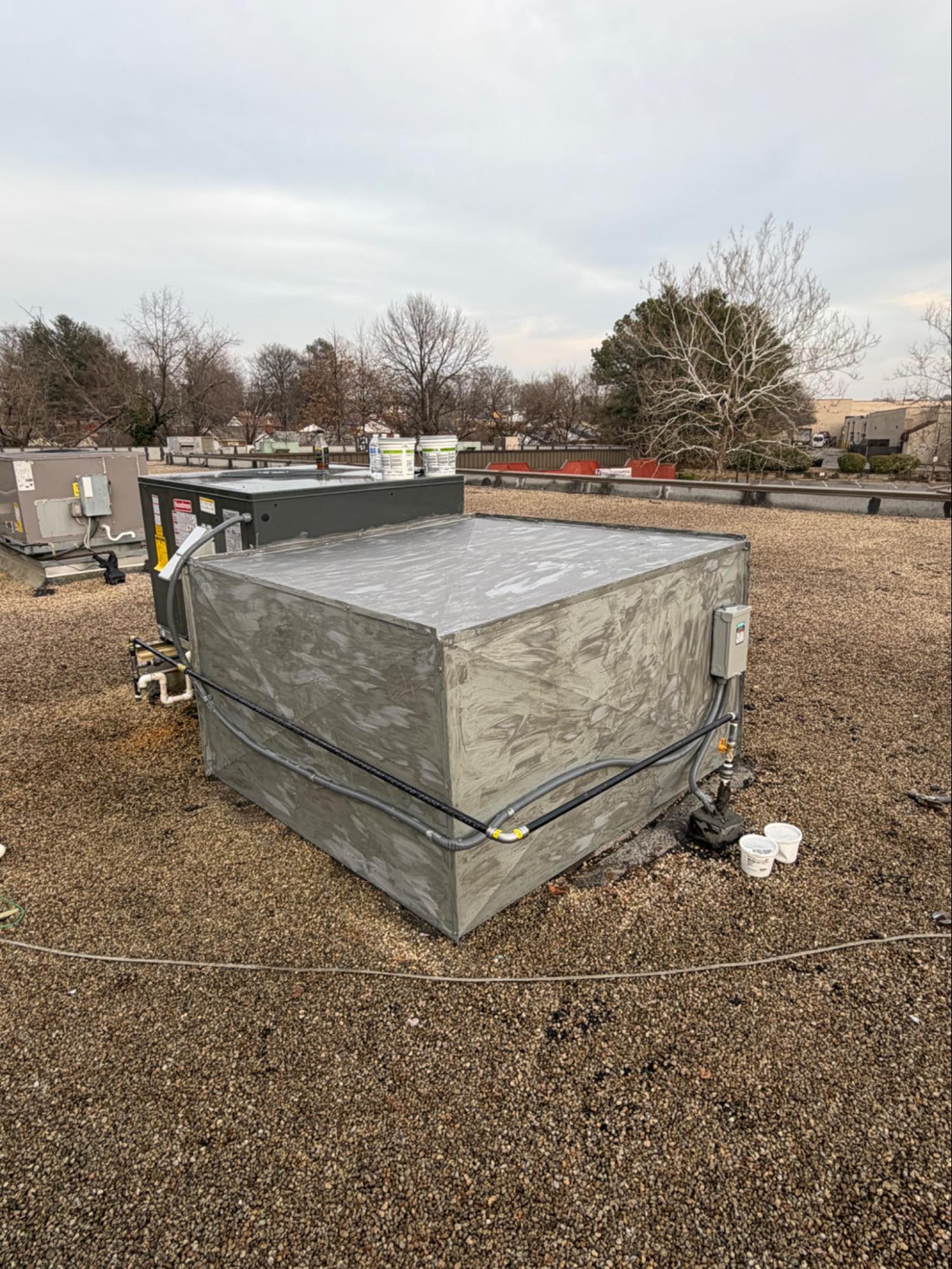

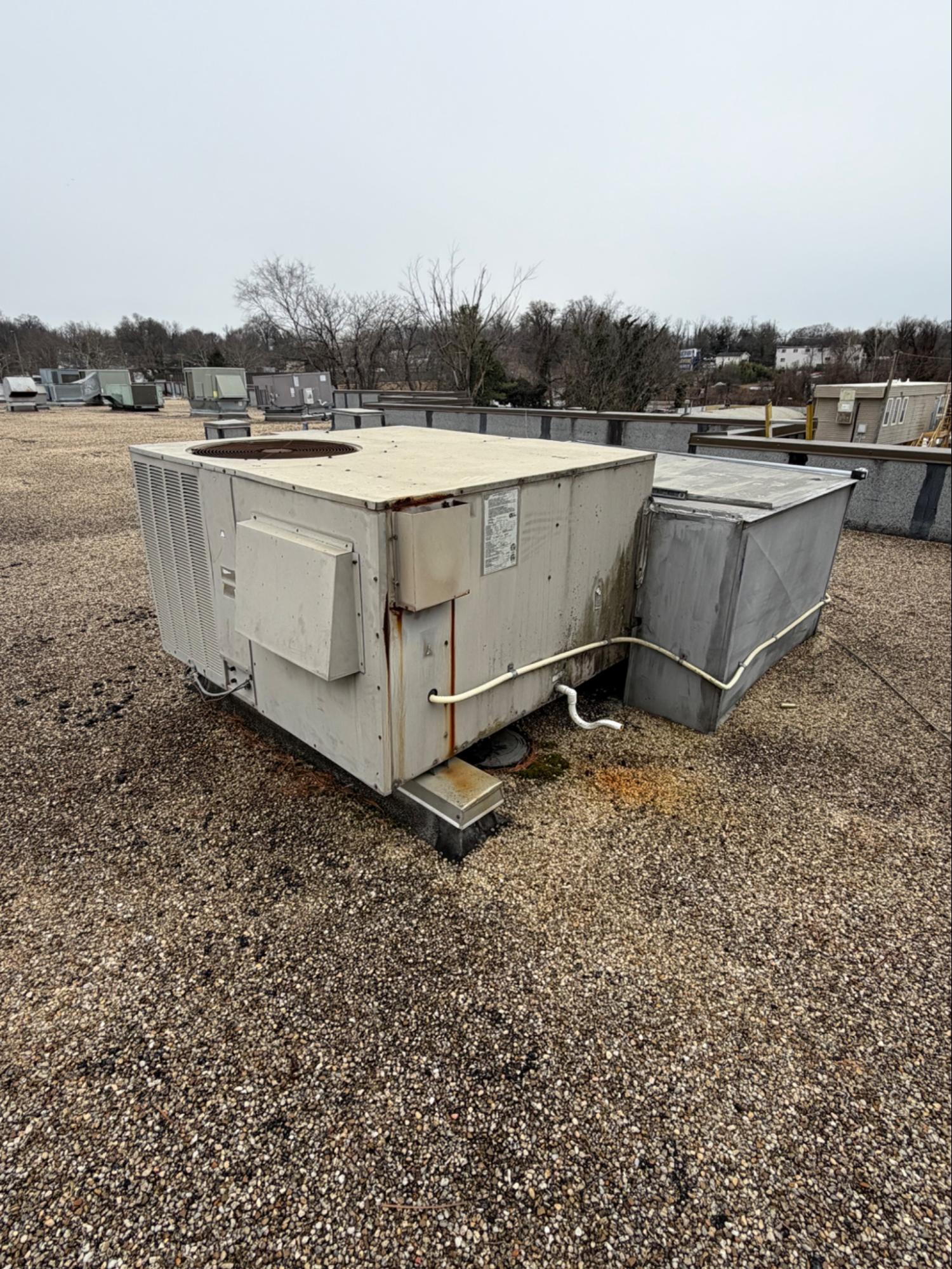

Project Location: Capitol Heights, Maryland
Property Type: Church / Commercial Building
Service: Commercial Rooftop HVAC Unit Replacement
Primary Issue: Defective Heat Exchanger in Aging Equipment
Equipment Installed: New Packaged Rooftop HVAC Unit
Additional Improvements: Return-Air Ductwork Expansion, Three Filter Slots, Gas Piping, Electrical Connections & Rooftop Duct Protection
The Challenge: An Aging Rooftop Unit with a Defective Heat Exchanger
A church operating in a commercial building in Capitol Heights, Maryland, needed professional HVAC service to evaluate its existing rooftop heating and cooling system.
During our diagnostic inspection, Capital Heat Pumps determined that the rooftop unit’s heat exchanger required replacement.
The heat exchanger is an essential component of a gas-fired heating system. It transfers heat from the combustion process to the air circulating through the building while keeping combustion gases separated from the indoor air.
When a heat exchanger becomes defective, it can present serious safety concerns, including the potential for combustion gases to enter the occupied space.
Because the rooftop unit was already aging, replacing the heat exchanger would have required a significant investment in older equipment.
Rather than recommending an expensive repair without considering the overall condition of the system, we discussed the long-term value of replacing the complete rooftop unit.
After reviewing our recommendation, the customer decided to move forward with a complete commercial HVAC replacement.
An Additional Discovery: Filters Had Not Been Replaced for Several Years
During our evaluation, we discovered another important concern involving the building’s air filtration system.
The existing HVAC filters had not been replaced for several years.
The current occupants had been using the building without realizing that the filters required regular inspection and replacement.
They were unaware of the maintenance requirements and the importance of keeping the filtration system properly maintained.
Over time, dirty filters can accumulate significant amounts of dust and debris, creating resistance within the return-air system.
This can contribute to:
- Increased static pressure.
- Reduced airflow through the rooftop unit.
- Reduced heating and cooling performance.
- Additional strain on the blower motor.
- Increased energy consumption.
- Dust accumulation on internal HVAC components.
- Potential long-term equipment reliability concerns.
Although the neglected filters were not established as the cause of the defective heat exchanger, they represented an important maintenance issue that needed attention.
At Capital Heat Pumps, we believe that replacing HVAC equipment should also be an opportunity to identify conditions that could negatively affect the new system.
For this project, improving filter accessibility became an important part of the installation.
Our Recommendation: Replace the Rooftop Unit and Improve the Existing Installation
Rather than simply removing the old rooftop unit and installing a new one, we recommended several improvements to the surrounding mechanical system.
The project included:
- Complete replacement of the aging packaged rooftop HVAC unit.
- Expanded return-air ductwork to accommodate the new filtration arrangement.
- Three accessible filter slots for easier maintenance.
- Rerouted gas piping to connect the replacement equipment.
- Modified electrical connections.
- Protective covers over exposed rooftop ductwork.
These upgrades were designed to provide updated heating and cooling equipment while improving future maintenance access and reducing exposure of rooftop ductwork to the elements.
Our Solution: Complete Commercial Rooftop HVAC Installation
1. Replacing the Existing Packaged Rooftop Unit
Our technicians removed the aging rooftop HVAC equipment and installed a new packaged rooftop heating and cooling system.
Packaged rooftop units are commonly used in churches and commercial buildings because they combine heating and cooling equipment within a single outdoor cabinet.
Replacing the complete unit addressed the defective heat exchanger and provided the building with updated heating and cooling equipment.
This allowed the customer to avoid investing in a major repair to an older system while continuing to rely on other aging components.
2. Expanding the Return-Air Ductwork
As part of the replacement, we modified and expanded the existing return-air ductwork.
Return-air ductwork carries air from the occupied building back to the HVAC equipment for heating, cooling, and filtration.
Proper return-air design is important because excessive restriction can reduce airflow and affect system performance.
The ductwork modifications provided the necessary space for the new filtration arrangement and helped accommodate the replacement rooftop unit.
3. Installing Three Accessible Filter Slots
One of the most valuable improvements was the installation of three dedicated filter slots in the return-air ductwork.
Because the existing filters had not been changed for several years, we wanted to make routine maintenance more straightforward for the church’s occupants and maintenance personnel.
The new filter slots provide designated access points for inspecting and replacing the filters.
This arrangement helps simplify an important maintenance task and makes the filtration system easier to service.
We also explained the importance of regular filter changes so the customer would understand the maintenance requirements of the new equipment.
Properly maintained filters help protect the rooftop unit from excessive dust accumulation and support adequate airflow.
4. Rerouting the Gas Line
The new rooftop unit required adjustments to the existing gas piping.
Our technicians rerouted the gas line to accommodate the replacement equipment and its connection requirements.
Proper gas piping is essential for safe and reliable operation of a gas-fired rooftop heating system.
5. Modifying the Electrical Connections
We also modified the electrical connections to accommodate the new rooftop unit.
Commercial HVAC equipment requires electrical connections appropriate for the equipment’s voltage, current requirements, and manufacturer specifications.
Updating these connections was part of integrating the replacement system with the building’s existing infrastructure.
6. Installing Protective Covers Over Rooftop Ductwork
The exposed ductwork on the roof was another area we addressed during the installation.
Rooftop ductwork is continuously exposed to rain, snow, sunlight, and changing temperatures.
Over time, this exposure can contribute to corrosion and deterioration, particularly when ductwork lacks adequate weather protection.
We installed protective covers over the exposed rooftop ductwork to help shield it from precipitation and reduce the risk of future rust and corrosion.
These covers also support the long-term condition of the ductwork and help protect the building’s HVAC investment.
Why Complete Rooftop Unit Replacement Made Sense
A defective heat exchanger does not automatically mean an entire rooftop unit must be replaced.
In some situations, replacing the heat exchanger may be a reasonable option, particularly when the equipment is relatively new and otherwise in good condition.
However, for this church, the age of the existing rooftop unit made complete replacement a more practical long-term investment.
The replacement provided several advantages.
Addressing the Heat Exchanger Concern
The defective heating equipment was replaced rather than repaired.
Updating Aging Equipment
The church received a new heating and cooling system instead of continuing to rely on older components.
Improving Maintenance Accessibility
The expanded return ductwork and three filter slots made future filter replacement more convenient.
Updating Mechanical Connections
The gas and electrical connections were modified for the new equipment.
Protecting Exposed Ductwork
The new rooftop duct covers help reduce weather exposure and corrosion risk.
The Results: A More Maintainable Commercial HVAC System
The completed installation provided the church in Capitol Heights with updated rooftop heating and cooling equipment and several improvements to the existing mechanical system.
Project highlights included:
- Diagnosed a defective heat exchanger in the existing rooftop HVAC unit.
- Recommended complete replacement based on the equipment’s age and condition.
- Replaced the aging packaged rooftop heating and cooling system.
- Discovered that the air filters had not been replaced for several years.
- Learned that the building’s occupants were unaware of the need for regular filter replacement.
- Expanded and modified the return-air ductwork.
- Installed three accessible filter slots to simplify future maintenance.
- Explained the importance of routine filter inspection and replacement.
- Rerouted the gas piping for the new rooftop unit.
- Modified the electrical connections.
- Added protective covers over exposed rooftop ductwork to reduce weather exposure and corrosion risk.
The project went beyond replacing the failed equipment.
By addressing filtration access, mechanical connections, and rooftop duct protection, Capital Heat Pumps helped create a more serviceable installation designed to support long-term operation.
Why Commercial HVAC Maintenance Matters
One of the biggest lessons from this project is that building occupants may not always be aware of their HVAC system’s maintenance requirements.
In this case, the filters had gone unchanged for several years because the occupants did not realize they needed to be replaced.
This highlights the importance of making maintenance tasks accessible and communicating equipment care requirements to building owners and occupants.
Commercial HVAC systems should have filters inspected regularly and replaced according to manufacturer recommendations and actual operating conditions.
Neglecting filter maintenance can lead to airflow restrictions, reduced performance, and unnecessary strain on equipment.
At Capital Heat Pumps, we believe a successful commercial HVAC installation should consider not only how the system operates today, but also how it will be maintained in the years ahead.
Need a Commercial Rooftop HVAC Replacement in Capitol Heights, MD?
At Capital Heat Pumps, we specialize in commercial rooftop unit replacements, HVAC diagnostics, gas heating systems, ductwork modifications, filtration improvements, and mechanical equipment installations.
We work with churches, commercial property owners, property managers, and other facilities throughout the Maryland and Washington, DC Metro area.
Whether your rooftop HVAC system has a defective heat exchanger, is experiencing repeated breakdowns, or is approaching the end of its service life, our team can help evaluate your repair and replacement options.
We proudly serve Capitol Heights, Prince George’s County, Washington, DC, and surrounding communities.
Contact Capital Heat Pumps today to schedule a commercial HVAC evaluation or request an estimate for a rooftop unit replacement.
Capital Heat Pumps — Commercial Heating and Cooling Solutions Focused on Reliability, Accessibility, and Long-Term Performance.
