
Heat Pump Replacement in Laurel, MD – R-22 System, Breaker Trips & Refrigerant Line Cleaning
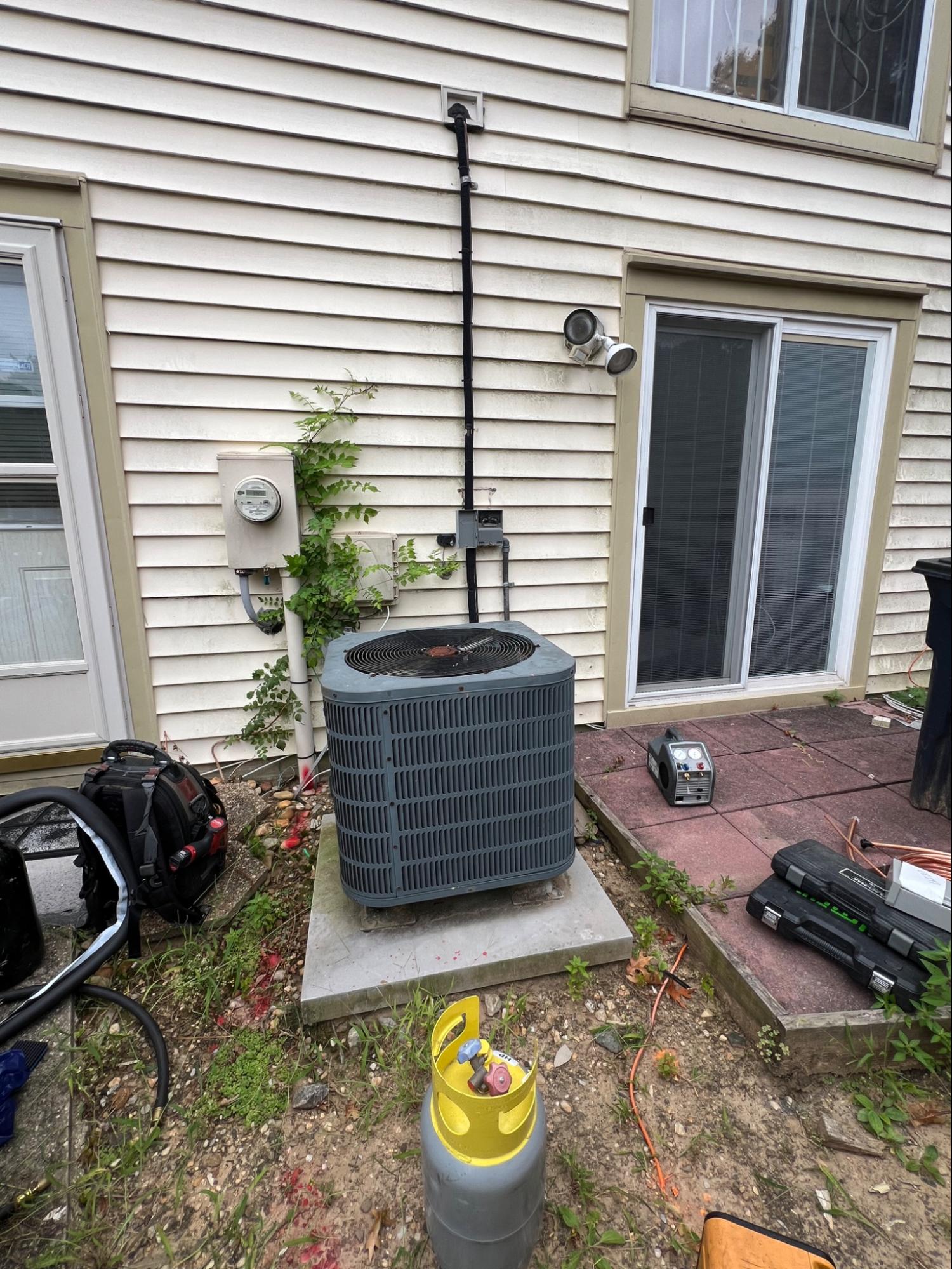
Capital Heat Pumps replaced an aging R-22 heat pump in Laurel, Maryland, after the system repeatedly tripped its circuit breaker shortly after starting. During the replacement, our technicians also performed a thorough refrigerant line-set cleaning using Hilmor cleaning pigs and nitrogen, revealing significant copper-colored residue inside the existing refrigerant piping.

Project Location: Laurel, Maryland
Property Type: Residential Home
Service: Complete Heat Pump Replacement
Existing Equipment: Aging R-22 Heat Pump
Primary Problem: Circuit Breaker Tripping After Several Minutes of Operation
Additional Improvements: Upgraded Outdoor Condenser Pad & Refrigerant Line-Set Cleaning
The Challenge: An Older Heat Pump That Kept Tripping the Breaker
A homeowner in Laurel, Maryland, contacted Capital Heat Pumps because their existing heat pump was no longer operating reliably.
The equipment would start running, but after several minutes, the circuit breaker would trip and shut the system down.
A breaker that repeatedly trips can indicate an electrical or mechanical problem requiring professional diagnosis.
Potential causes include compressor faults, excessive current draw, damaged wiring, failed electrical components, or issues with the electrical circuit.
In this case, the existing heat pump was also an older system that operated using R-22 refrigerant.
Given the age of the equipment, the recurring shutdowns, and the cost considerations associated with maintaining older R-22 systems, we discussed complete system replacement with the homeowner.
The homeowner decided that investing in a new heat pump was the better long-term option.
Why Replacing the R-22 System Made Sense
R-22 refrigerant was widely used in older residential air conditioning and heat pump systems.
However, production and importation of R-22 for routine servicing have been phased out in the United States.
Although existing systems can still be serviced using available reclaimed or previously produced refrigerant, major repairs to older R-22 equipment may not be financially attractive.
For this Laurel homeowner, replacing the system offered several advantages:
- Moving away from aging R-22 equipment.
- Eliminating reliance on the old system’s deteriorating components.
- Installing updated heating and cooling technology.
- Avoiding a major investment in an older heat pump with recurring operating problems.
- Providing a more dependable long-term heating and cooling solution.
Our Solution: Complete Heat Pump Replacement
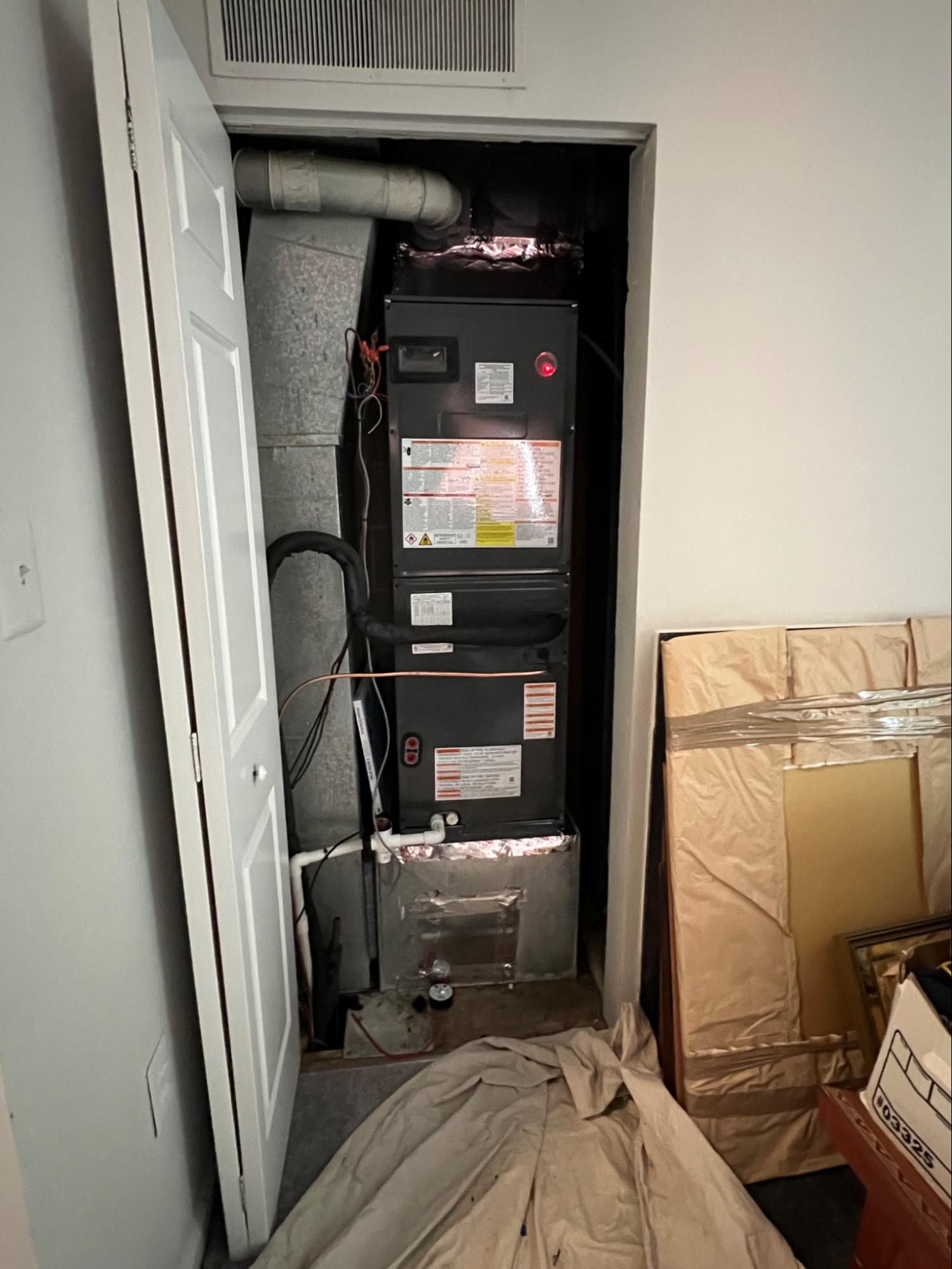
This project was relatively straightforward because the existing HVAC configuration did not require major ductwork modifications or extensive equipment relocation.
However, we still took important steps to prepare the existing refrigerant piping before connecting it to the replacement equipment.
1. Removing the Existing R-22 Heat Pump
Our technicians removed the aging heat pump equipment as part of the replacement.
Because the system contained R-22 refrigerant, appropriate refrigerant recovery and handling were important parts of the removal process.
The existing heating and cooling equipment was replaced with a new heat pump system.
2. Cleaning the Existing Refrigerant Line Set with Hilmor Cleaning Pigs
One of the most important details of this installation involved the existing copper refrigerant line set.
When replacing an older R-22 system, we pay close attention to the condition of the refrigerant piping, especially when the existing lines will be reused.
Old refrigerant lines can contain residual oil, debris, and other contamination that should not be introduced into the replacement system.
At Capital Heat Pumps, our installation process includes cleaning and evaluating existing refrigerant lines when they are being reused.
For this project, we used Hilmor line-set cleaning pigs, flexible rubber cleaning tools designed to travel through suitable refrigerant piping and help remove residue from the interior walls.
Using pressurized nitrogen, we pushed the cleaning pigs through the existing copper line set.
As the pigs traveled through the tubing, they helped dislodge and carry out material that had accumulated inside the lines.
3. Discovering Copper-Colored Residue Inside the Refrigerant Lines
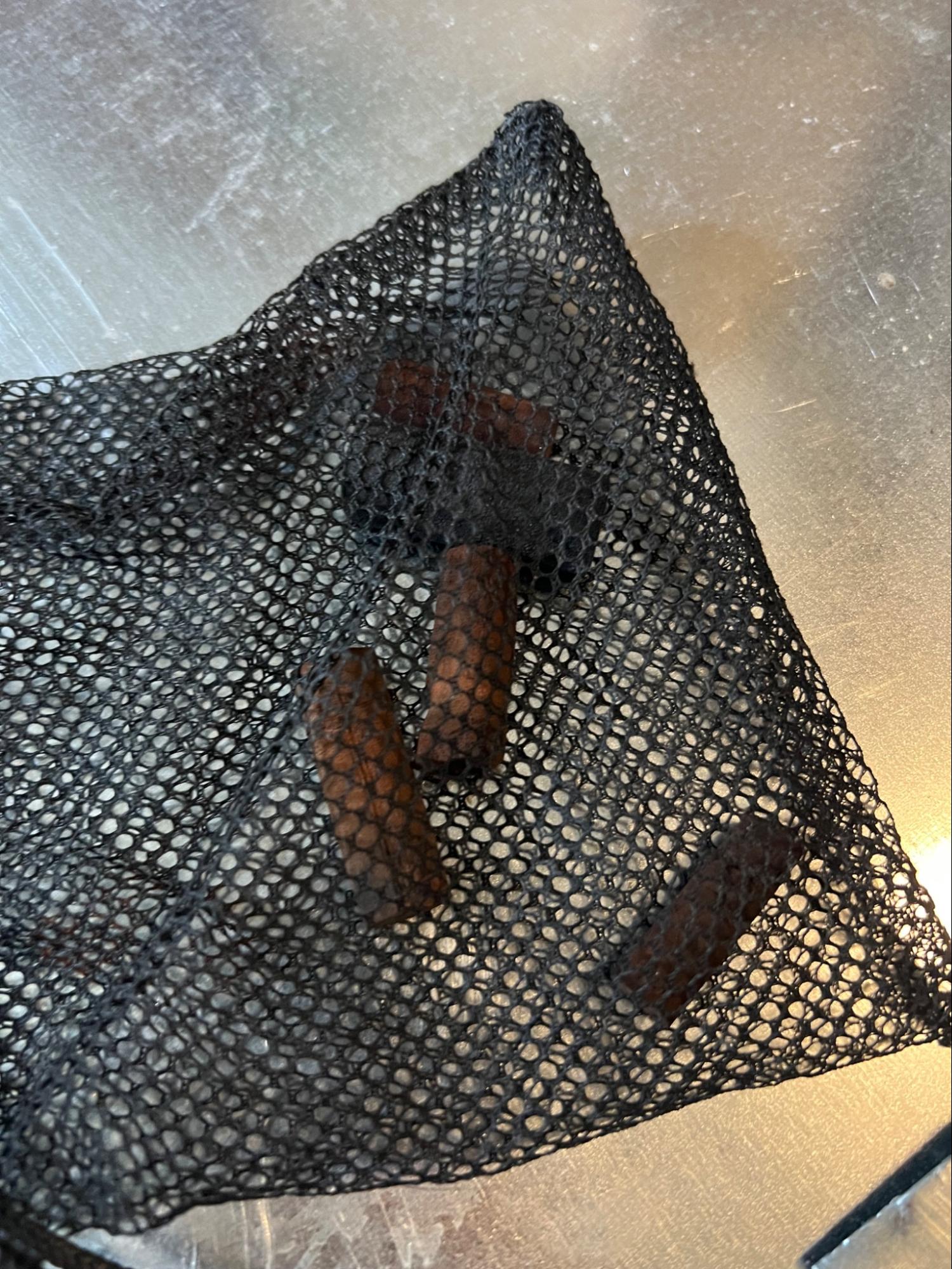
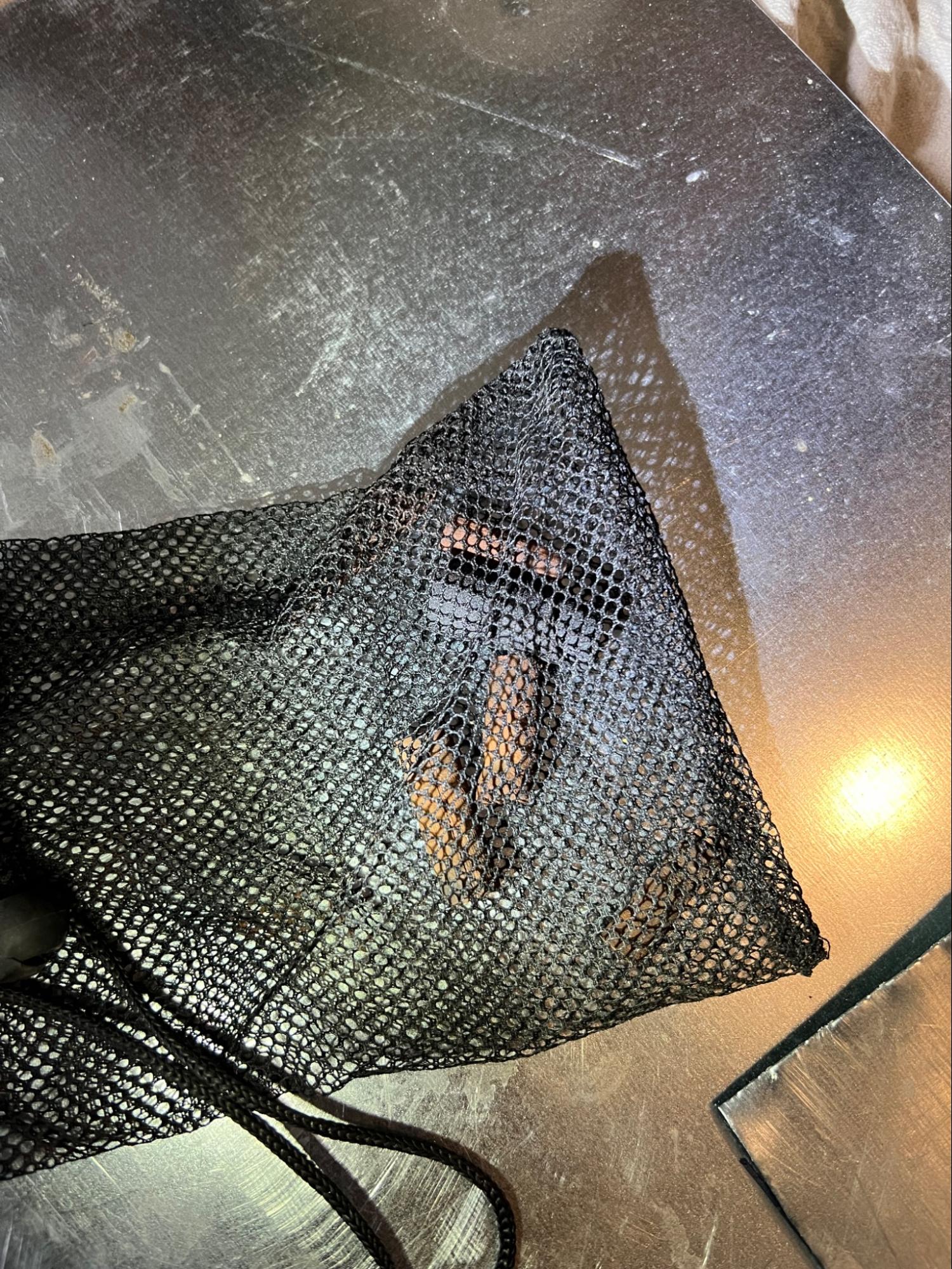
During the cleaning process, we discovered a significant amount of copper-colored residue inside the existing refrigerant piping.
The contamination was visible on the Hilmor cleaning pigs after they passed through the line set.
This provided a clear visual indication that material had been present inside the tubing.
The residue’s exact composition was not laboratory-tested, so its appearance alone did not establish whether it consisted of copper oxide, oil-related deposits, or another form of contamination.
Nevertheless, the visible material reinforced why cleaning and inspecting reused refrigerant lines is an important part of the replacement process.
Rather than connecting the new equipment directly to the existing piping without preparation, we took additional steps to remove accumulated material.
This is the kind of installation detail that homeowners may never see, but it can make a meaningful difference in how carefully a replacement system is prepared.
4. Flushing the Line Set with Nitrogen
We used nitrogen as part of the line-set cleaning process to push the cleaning pigs through the tubing and help clear loosened debris.
Nitrogen is commonly used in refrigeration service because it is dry and does not introduce oxygen or moisture into the system when properly handled.
The goal was to prepare the existing piping for reuse and reduce the amount of residual contamination that could enter the new refrigerant circuit.
Cleaning pigs and nitrogen do not automatically guarantee that a line set is suitable for reuse. Compatibility, pipe sizing, condition, and the new equipment manufacturer’s requirements must also be considered.
5. Installing the New Heat Pump System
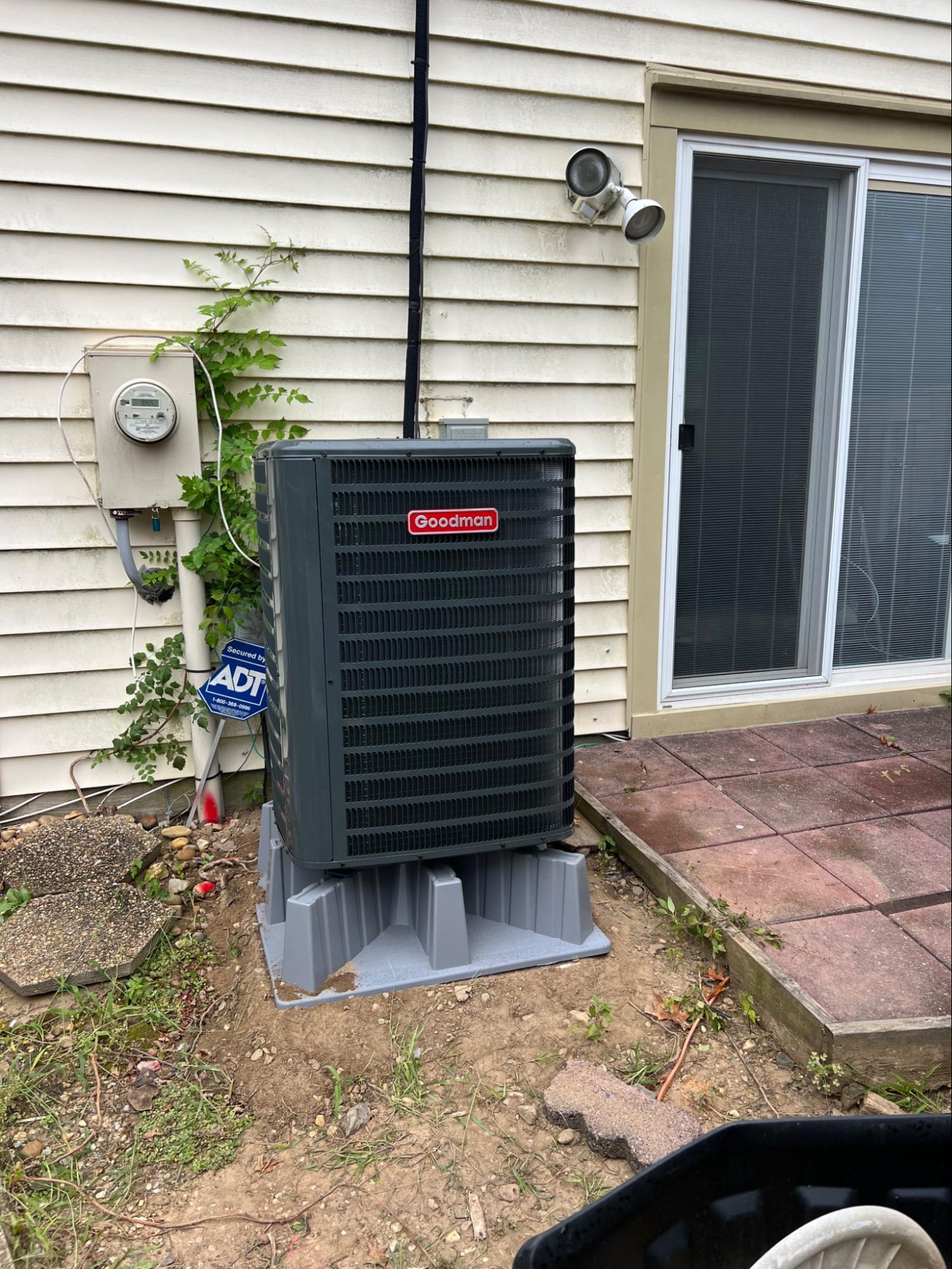
After preparing the refrigerant piping, we installed the replacement heat pump equipment.
The new system provides both heating and cooling, replacing the older R-22 configuration.
This allowed the homeowner to move forward with updated equipment rather than continue dealing with recurring shutdowns from the aging system.
6. Upgrading the Outdoor Condenser Pad
We also installed an improved outdoor equipment pad.
The pad provides a stable foundation for the new outdoor heat pump and helps keep the equipment properly supported above the surrounding ground.
This was one of the few physical installation changes required beyond replacing the HVAC equipment and preparing the existing refrigerant lines.
Why Refrigerant Line Cleaning Matters During HVAC Replacement
A complete HVAC replacement involves more than installing new indoor and outdoor equipment.
The refrigerant line set connects the major components of the system and carries refrigerant between them.
When existing piping is reused, its internal condition matters.
Potential contaminants can include:
- Residual refrigerant oil from the previous system.
- Copper oxides or other deposits.
- Dirt and installation debris.
- Moisture and other unwanted materials.
Contamination inside a refrigeration circuit can contribute to operating problems and potential damage to sensitive components.
For that reason, line-set reuse should be evaluated carefully, particularly when replacing an older R-22 system with equipment designed for a different refrigerant.
In some cases, replacing the line set may be preferable or required by the manufacturer.
For this Laurel project, our cleaning process revealed visible residue that otherwise might have remained inside the existing piping.
The Results: New Heat Pump, Cleaner Refrigerant Piping & Improved Equipment Support
The completed installation provided the homeowner with a replacement heat pump system and additional attention to the condition of the reused refrigerant lines.
Project highlights included:
- Evaluated an aging R-22 heat pump that repeatedly tripped its circuit breaker.
- Recommended complete system replacement rather than continued investment in older equipment.
- Removed the existing heating and cooling equipment.
- Installed a new heat pump system.
- Used Hilmor rubber cleaning pigs to clean the existing refrigerant line set.
- Pushed the cleaning pigs through the piping using nitrogen.
- Discovered significant copper-colored residue on the cleaning pigs.
- Removed accumulated material as part of preparing the piping for reuse.
- Installed an improved outdoor condenser pad.
- Completed a straightforward system replacement without extensive ductwork modifications.
The project demonstrates how even a relatively simple HVAC replacement can include important preparation work behind the scenes.
Why Choose Capital Heat Pumps for Heat Pump Replacement?
At Capital Heat Pumps, we believe proper installation practices are just as important as the equipment being installed.
A new heat pump represents a significant investment, and the condition of the surrounding installation can affect long-term performance.
That is why we pay attention to details such as refrigerant piping, equipment support, airflow, drainage, and system compatibility.
For this Laurel homeowner, that meant taking the time to clean the existing copper refrigerant lines and address visible contamination before completing the replacement.
Our goal is to provide homeowners with carefully installed heating and cooling equipment designed for dependable operation.
Need a Heat Pump Replacement in Laurel, MD?
If your heat pump keeps tripping the circuit breaker, requires repeated repairs, or still operates on R-22 refrigerant, Capital Heat Pumps can help evaluate your options.
We provide residential heat pump diagnostics, complete HVAC replacements, refrigerant line-set evaluations, and heating and cooling installations throughout Laurel, Prince George’s County, and the surrounding Washington, DC Metro area.
Contact Capital Heat Pumps today to schedule a heat pump evaluation or request an estimate for a complete system replacement in Laurel, Maryland.
Capital Heat Pumps — Quality HVAC Installations with Attention to the Details That Matter.
