
Complete HVAC System & Ductwork Replacement in Bowie, MD – Correcting Airflow, Moisture & Indoor Air Quality Problems
Capital Heat Pumps completed a comprehensive heating and cooling system replacement in Bowie, Maryland, including HVAC load calculations, new ductwork, improved insulation, an upgraded air cleaner and air purifier, and additional condensate protection. The project addressed loud ductwork noises, moisture concerns, and deteriorated materials above the garage ceiling.



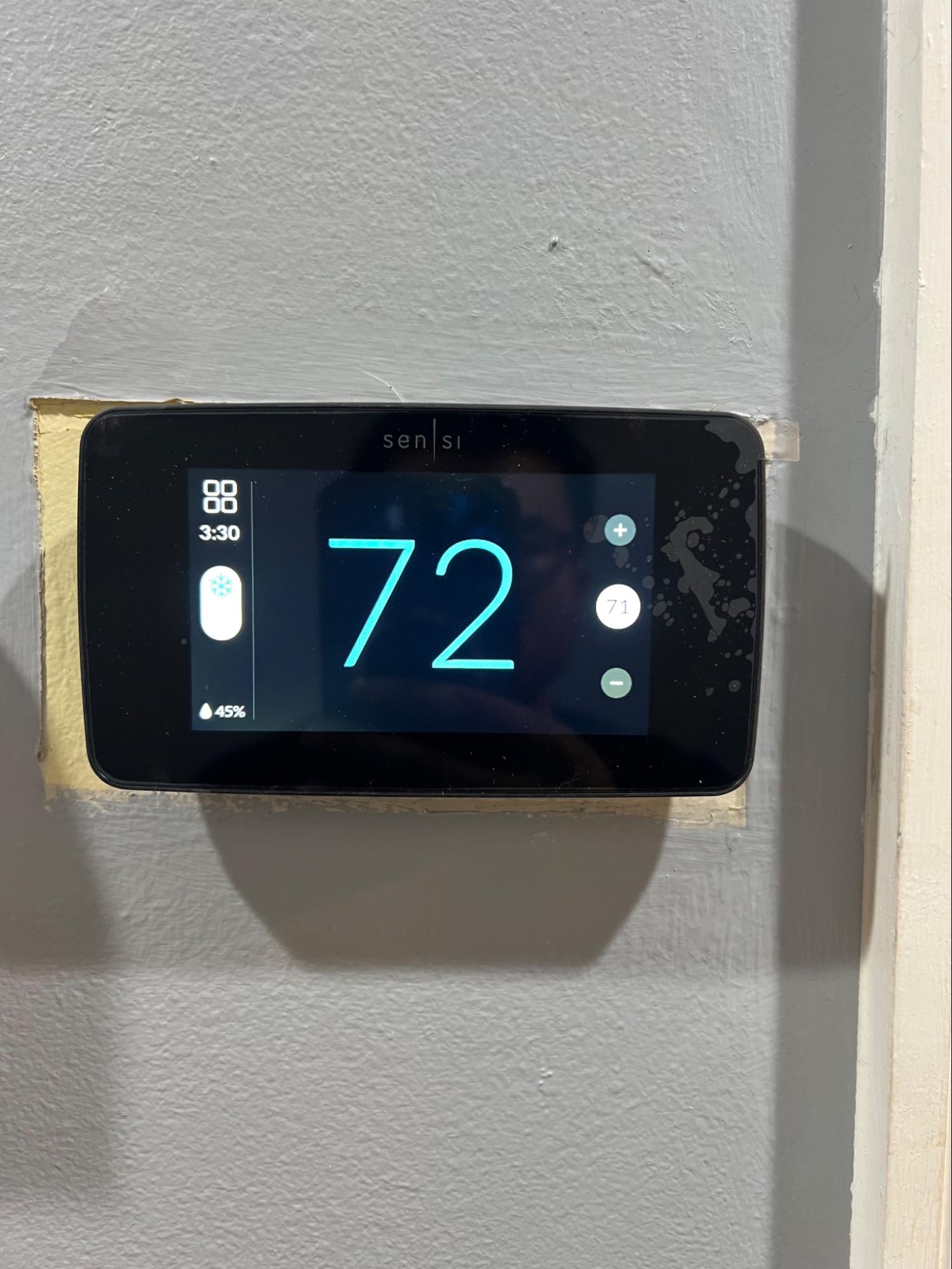

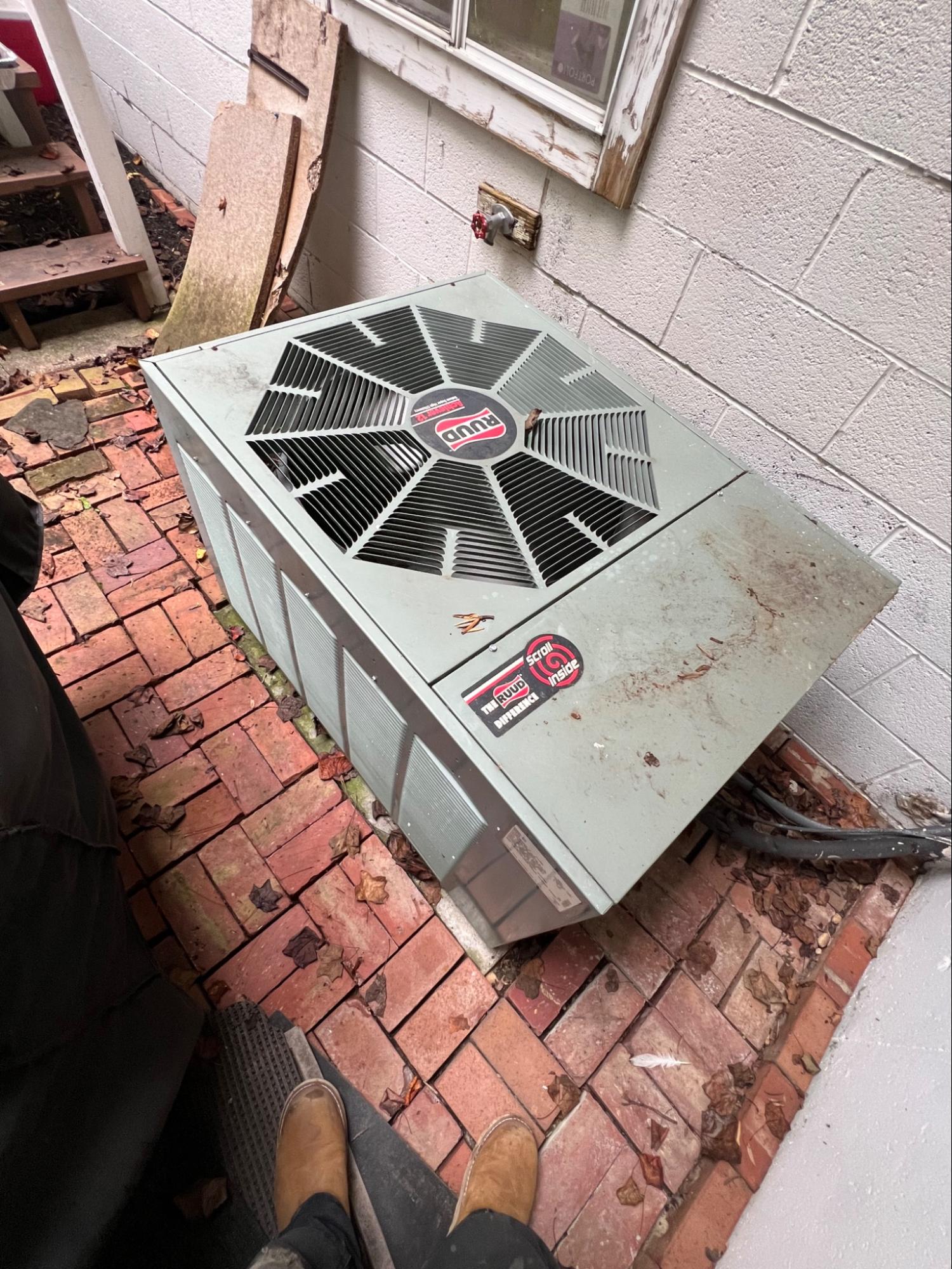
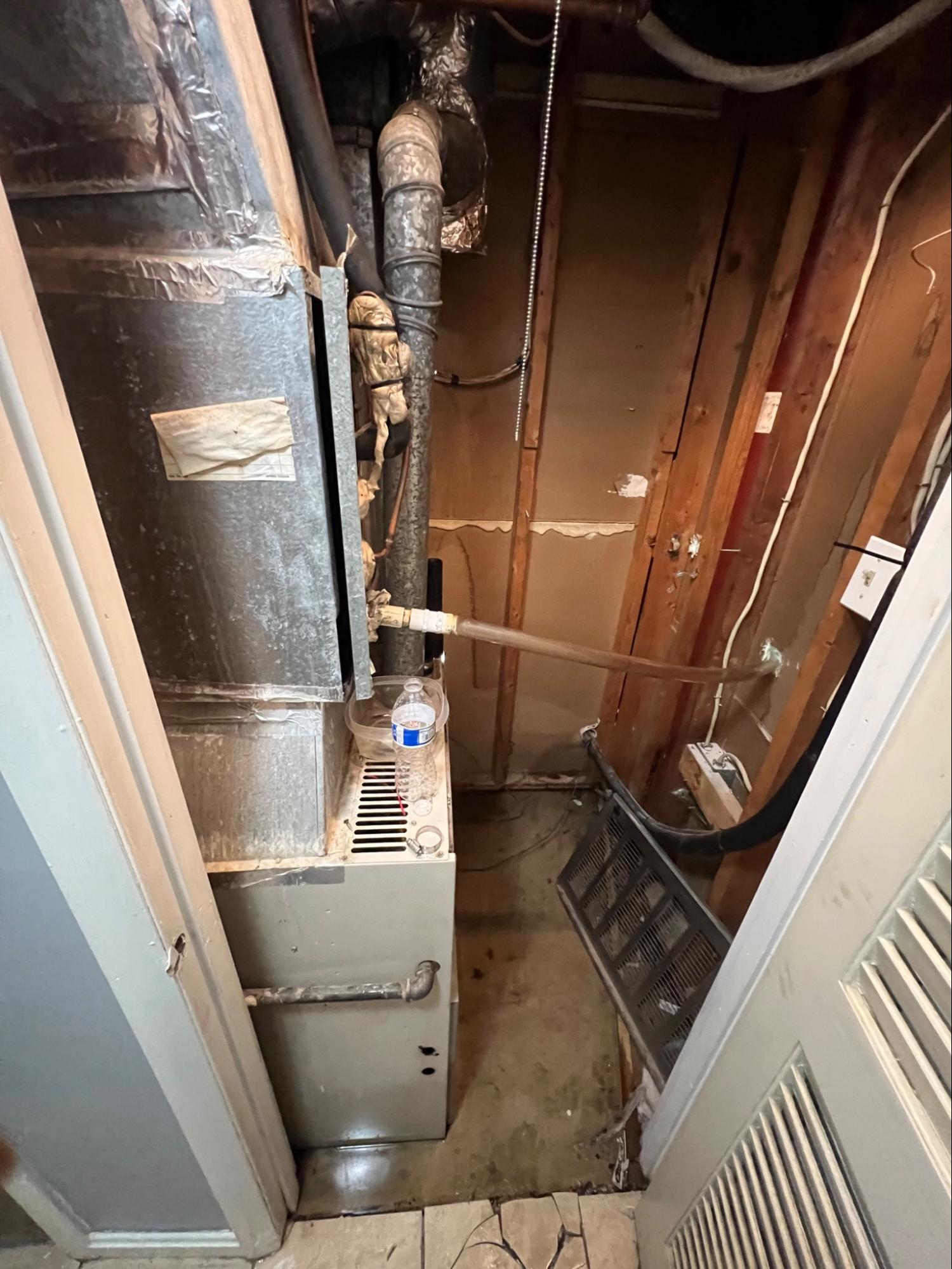
Project Location: Bowie, Maryland
Property Type: Residential Home
Service: Complete HVAC System & Ductwork Replacement
Additional Services: HVAC Load Calculations, Ductwork Redesign, Indoor Air Quality Improvements & Condensate Protection
Existing Problems: Loud Ductwork Banging, Improper Duct Insulation, Moisture Problems & Suspected Mold Contamination
The Challenge: Loud Ductwork, Moisture Problems & an Aging HVAC System
A homeowner in Bowie, Maryland, was experiencing several problems with their existing heating and cooling system.
One of the most noticeable issues was a loud banging noise coming from the ductwork whenever the HVAC system started operating.
This type of noise can occur when sheet metal ductwork expands, contracts, or flexes because of changes in temperature and air pressure.
While some ductwork movement is normal, loud banging can indicate problems involving duct sizing, airflow restrictions, static pressure, or inadequate duct support.
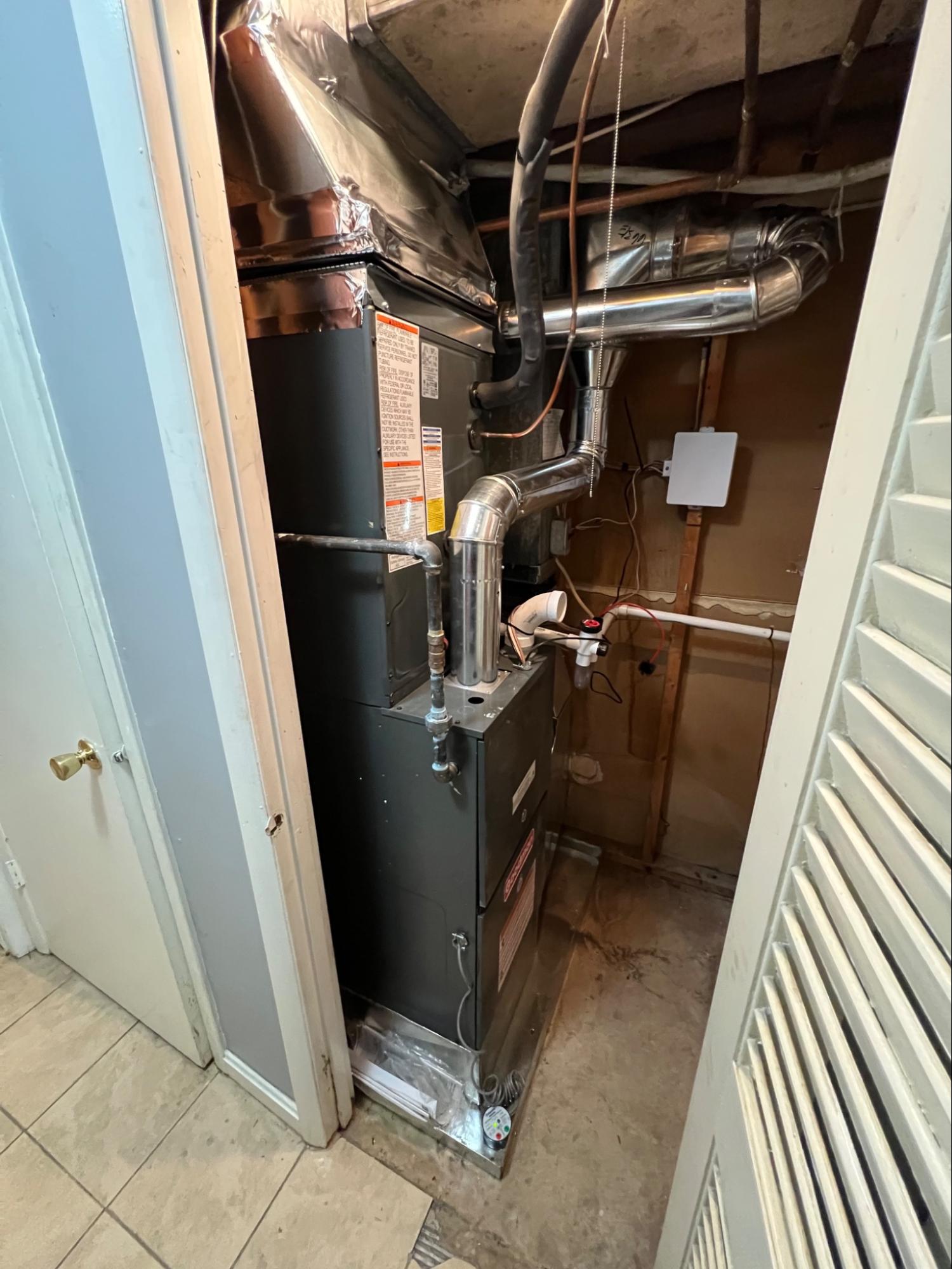
The homeowner was also experiencing moisture problems around the indoor HVAC equipment, with water accumulating on the floor near the existing system.
During our evaluation, we identified additional concerns involving the ductwork installed above the garage ceiling.
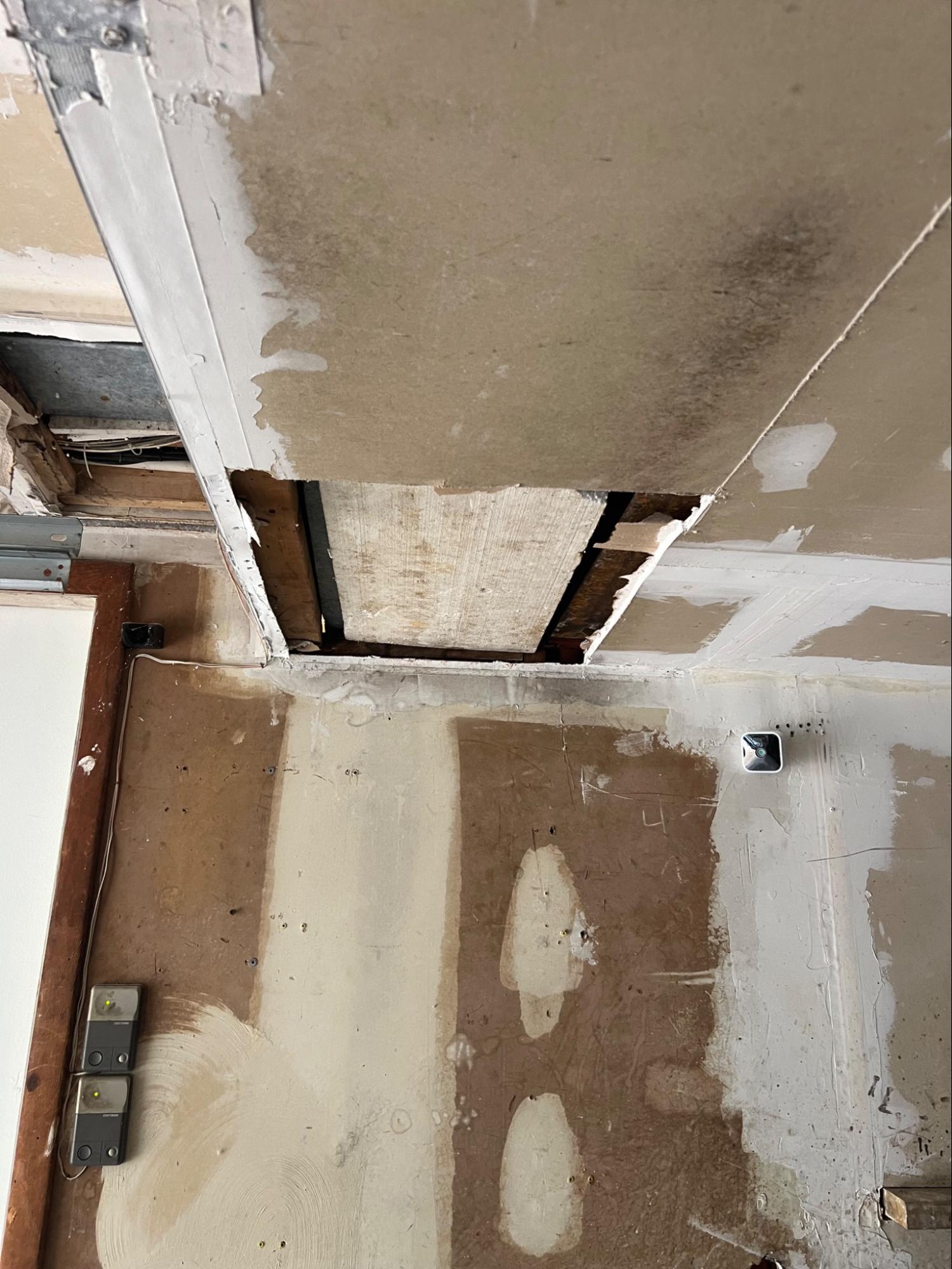
The garage ceiling area had extensive visible mold-like growth, and the existing ductwork was not properly insulated.
These conditions made it clear that simply replacing the heating and cooling equipment would not address all the problems affecting the home.
At Capital Heat Pumps, we recommended a more comprehensive solution focused on the HVAC equipment, duct distribution system, moisture management, and indoor air quality.
Looking Beyond the Equipment: Why the Existing Ductwork Needed Attention
An HVAC system depends on properly designed ductwork to distribute conditioned air throughout a home.
Even high-quality heating and cooling equipment can experience performance problems when connected to poorly sized, improperly insulated, or restrictive ductwork.
During our evaluation, we identified several concerns.
Loud Banging During HVAC Operation
The existing ductwork produced a loud banging sound when the system turned on.
This raised concerns about duct movement and operating conditions within the air distribution system.
Instead of assuming the noise was normal, we included the ductwork in our overall evaluation.
Improper Duct Insulation
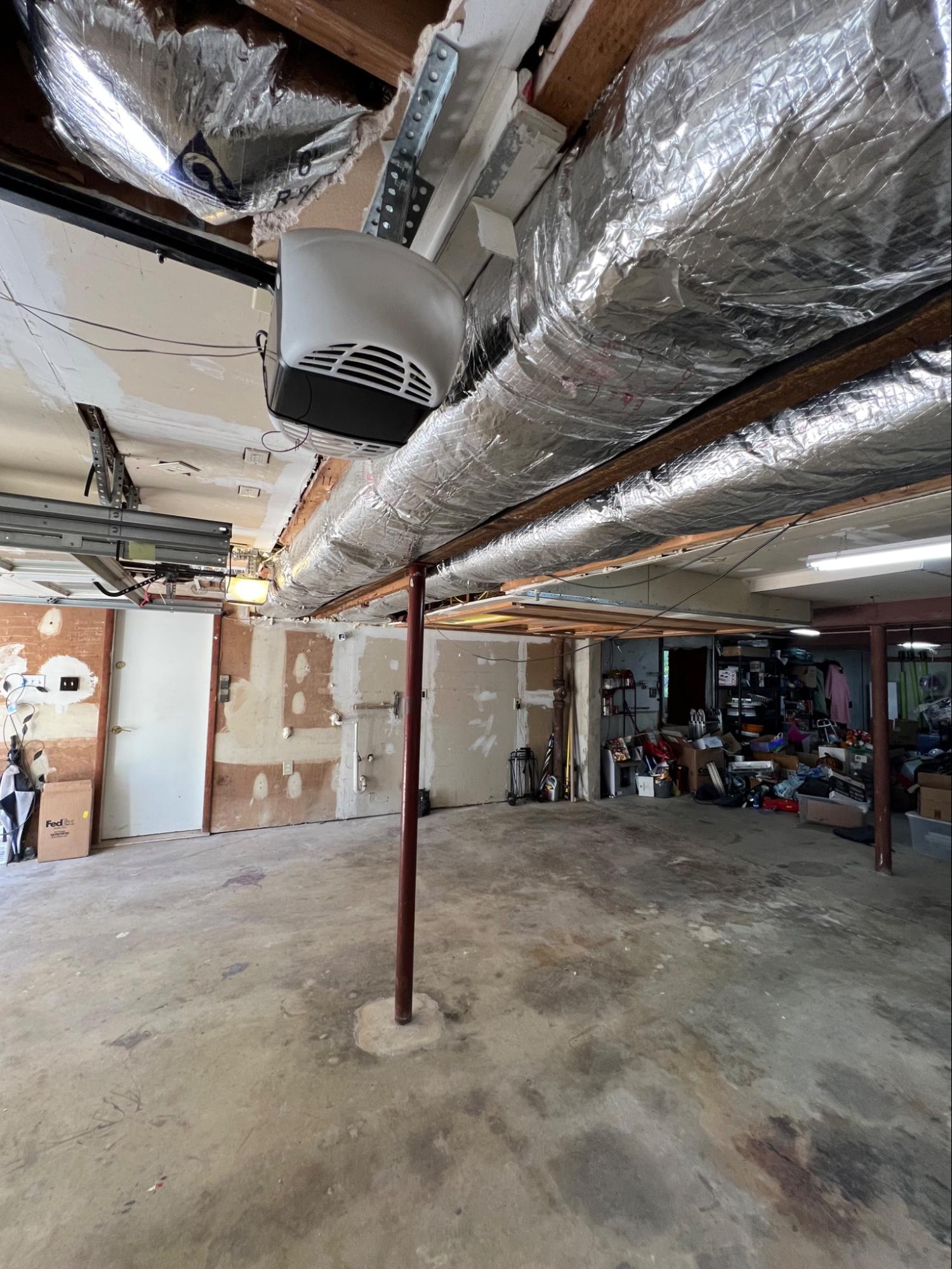
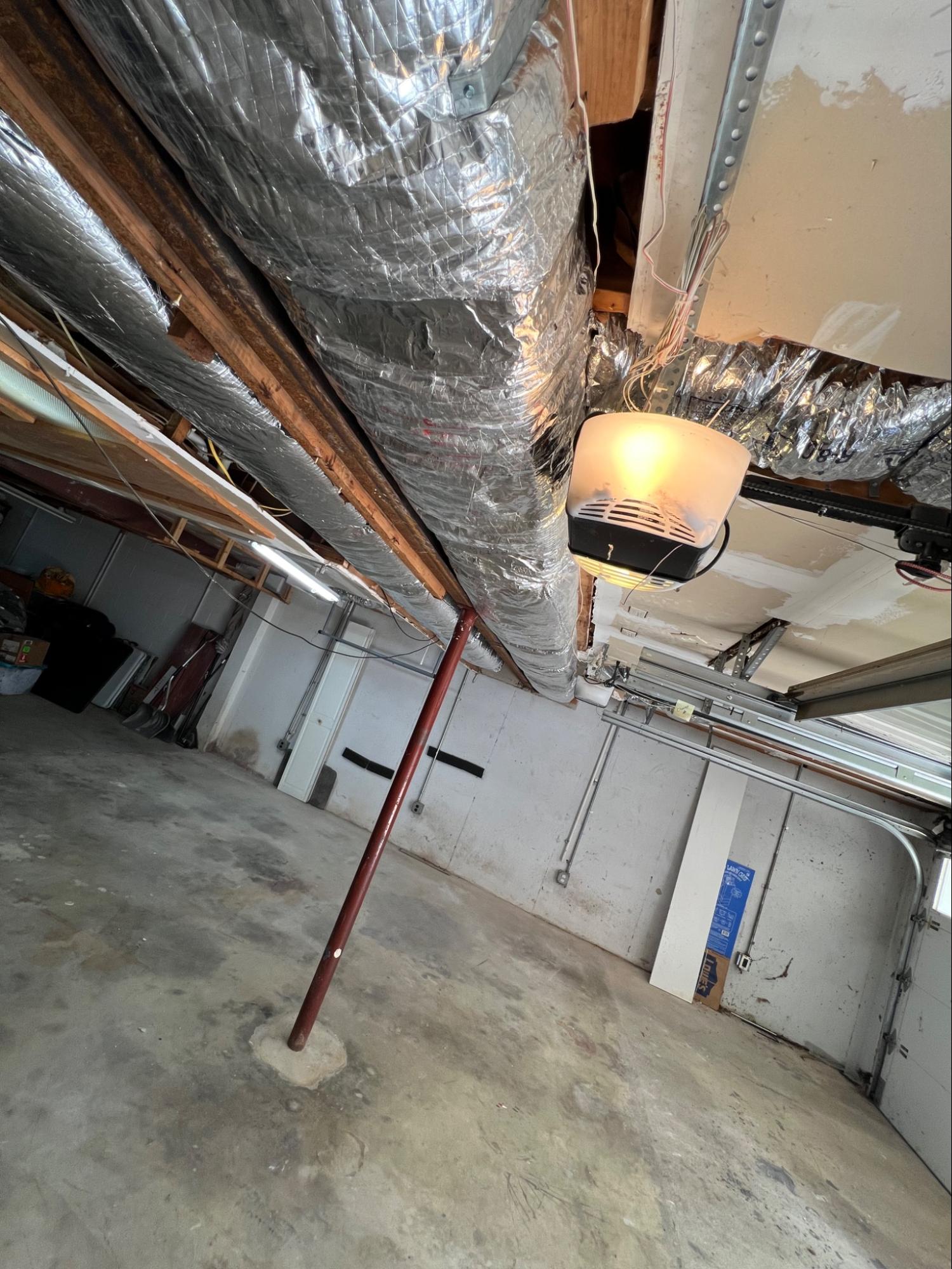
We discovered that the ductwork above the garage ceiling had not been insulated properly.
When cold supply-air ducts run through an unconditioned or humid space, inadequate insulation or poorly sealed vapor barriers can allow condensation to develop on duct surfaces.
Over time, repeated moisture exposure can damage surrounding building materials and contribute to conditions favorable for microbial growth.
Moisture and Mold Concerns Above the Garage
The ceiling above the garage showed extensive mold-like contamination.
Because of the condition of the area and the ductwork, the project required removal of the existing duct system and opening the garage ceiling to access the affected installation.
Mold assessment and remediation are separate specialized services. Any contaminated building materials must be evaluated and handled by appropriately qualified professionals before the affected area is enclosed again.
Water Accumulation Around the Indoor HVAC Equipment
The existing indoor unit had also been associated with water accumulating on the floor.
This raised concerns about condensate drainage and the possibility of future water damage.
As part of the new installation, we recommended additional condensate protection.
Our Recommendation: A Complete HVAC and Ductwork Redesign
Rather than replacing the HVAC equipment and reconnecting it to the existing problematic ductwork, we recommended a complete system replacement with new duct distribution.
Our approach included:
- Performing HVAC load calculations to determine appropriate equipment sizing.
- Replacing the existing heating and cooling equipment.
- Removing and replacing the existing ductwork.
- Opening the garage ceiling to access the duct system.
- Addressing duct insulation deficiencies through the replacement design.
- Installing an upgraded media air cleaner.
- Adding an air purification system.
- Installing an auxiliary condensate drain pan for additional protection.
The goal was to correct the underlying installation concerns while providing the homeowner with a better-designed heating and cooling system.
Our Solution: Complete HVAC System Replacement & New Ductwork
1. Performing Load Calculations for Proper Equipment Sizing
Before selecting the replacement HVAC equipment, we evaluated the home’s heating and cooling requirements.
Proper equipment sizing is essential for maintaining comfort and supporting efficient operation.
A system that is oversized may cycle frequently and experience humidity-control problems, while an undersized system may struggle to maintain the desired indoor temperature during extreme weather.
Using residential HVAC load-calculation principles, we worked to select equipment appropriate for the home’s heating and cooling needs.
Our goal was to right-size the replacement system rather than simply install equipment based on the capacity of the old unit.
Equipment sizing is only one part of a successful installation. The ductwork must also be capable of distributing the required airflow.
2. Replacing the Complete HVAC System
Our technicians replaced the existing heating and cooling equipment with a new HVAC system.
The new equipment was selected as part of the overall redesign rather than treated as a direct replacement without considering the existing ductwork problems.
By evaluating the equipment and air distribution system together, we could approach the installation as a complete comfort solution.
3. Removing the Existing Ductwork and Opening the Garage Ceiling
One of the most extensive portions of this project involved removing the existing ductwork.
The duct system was located above the garage ceiling, requiring the ceiling to be opened and removed where necessary to access the installation.
The condition of the ceiling and surrounding area also raised concerns about moisture and mold-like contamination.
Removing the old ductwork allowed the replacement system to be installed without relying on the existing improperly insulated distribution system.
The affected building materials required appropriate assessment and remediation as part of the overall restoration process.
4. Installing New, Properly Insulated Ductwork
After removing the existing duct system, we installed replacement ductwork designed for the home’s heating and cooling requirements.
The new ductwork addressed the insulation deficiencies identified during the original evaluation.
Proper duct insulation is particularly important in areas such as garages, attics, and other spaces outside the home’s conditioned envelope.
Insulation helps reduce unwanted heat transfer and, when installed with appropriate vapor control and air sealing, helps reduce the risk of condensation on cold duct surfaces.
The replacement ductwork also provided an opportunity to improve the overall air distribution layout.
Our focus was to create a duct system better suited to the new HVAC equipment and the home’s airflow requirements.
5. Addressing the Loud Ductwork Banging
The original duct system produced a loud banging sound whenever the HVAC equipment started.
As part of the replacement, we eliminated the old ductwork and installed a new distribution system.
Proper duct sizing, secure installation, and appropriate airflow design can help reduce duct movement and noise associated with pressure changes.
This was an important consideration in the new ductwork design.
6. Installing a Media Air Cleaner
To improve the home’s air filtration, we installed a media air cleaner as part of the new HVAC system.
A media air cleaner uses a pleated filtration element to capture airborne particles circulating through the ductwork.
Depending on the filter’s efficiency rating, it can help capture:
- Household dust and lint.
- Pollen.
- Pet dander.
- Other airborne particulates.
A properly selected media filter can also help reduce dust accumulation on internal HVAC components, including the blower and evaporator coil.
This upgrade was particularly valuable because the homeowner was investing in a complete new ductwork and HVAC installation.
7. Adding an Air Purification System
In addition to the media air cleaner, we installed an air purification system.
The media air cleaner and air purifier serve different purposes.
The media filter captures particles as air passes through the system, while the air purifier provides an additional air-treatment function based on its specific technology.
Together, these upgrades formed part of a broader indoor air quality improvement strategy.
The effectiveness of an air purification system depends on its technology, installation, operating conditions, and the contaminants being addressed.
Air purification equipment is not a substitute for removing moisture sources or professionally remediating contaminated building materials.
8. Installing an Auxiliary Drain Pan for Additional Water Protection
Because the existing indoor HVAC unit had been associated with water accumulating on the floor, we also installed an auxiliary condensate drain pan.
During cooling operation, moisture from the indoor air condenses on the evaporator coil and is carried away through the condensate drainage system.
If the primary drain becomes blocked or condensate escapes from the equipment, water can accumulate around the unit.
An auxiliary drain pan provides an additional means of collecting certain types of condensate overflow.
This added protection was intended to help reduce the risk of future water damage to nearby flooring and building materials.
The Results: A Comprehensive HVAC Upgrade
This project went far beyond a conventional heating and cooling equipment replacement.
By addressing the ductwork, insulation, filtration, and moisture concerns, Capital Heat Pumps helped the homeowner move away from an installation with multiple underlying problems.
Project highlights included:
- Evaluated an existing HVAC system with loud ductwork banging during startup.
- Identified improperly insulated ductwork above the garage.
- Recognized extensive mold-like contamination concerns around the garage ceiling.
- Opened the garage ceiling to access the existing duct system.
- Removed the old ductwork.
- Performed heating and cooling load calculations for replacement equipment sizing.
- Installed a complete replacement HVAC system.
- Installed new ductwork with appropriate insulation considerations.
- Addressed duct sizing and installation factors associated with airflow and noise.
- Added a media air cleaner for upgraded particle filtration.
- Installed an air purification system.
- Added an auxiliary condensate drain pan for additional water protection.
- Provided a comprehensive solution focused on comfort, airflow, equipment performance, and long-term maintainability.
Rather than simply replacing the old HVAC equipment, this project allowed us to address important deficiencies in the surrounding installation.
Why Proper Ductwork Design Matters
A heating and cooling system is only as effective as the air distribution system supporting it.
Improperly designed or installed ductwork can contribute to:
- Uneven temperatures throughout the home.
- Excessive airflow noise.
- High static pressure.
- Reduced equipment performance.
- Increased heating and cooling energy consumption.
- Condensation problems when ductwork is inadequately insulated or sealed.
This is why Capital Heat Pumps evaluates ductwork conditions when recommending major HVAC replacements.
Proper load calculations, duct sizing, airflow design, insulation, and installation practices all contribute to a successful system.
The Importance of Moisture Control and Indoor Air Quality
This Bowie project also demonstrated why moisture management and indoor air quality should be considered together.
Moisture can accumulate because of condensate drainage problems, duct condensation, plumbing leaks, or other building conditions.
When building materials remain damp, microbial growth may develop.
Air cleaners and air purifiers can support an indoor air quality strategy, but the underlying moisture source and any contaminated materials must be addressed separately.
By upgrading the HVAC equipment, replacing improperly insulated ductwork, adding filtration, and incorporating condensate protection, the project addressed several important parts of the home’s overall HVAC performance and maintenance needs.
Need a Complete HVAC or Ductwork Replacement in Bowie, MD?
At Capital Heat Pumps, we specialize in residential HVAC system replacements, heating and cooling load calculations, custom ductwork installations, airflow evaluations, indoor air quality improvements, and condensate protection upgrades.
Whether your ductwork makes loud noises, your HVAC system struggles to maintain comfort, or you’re dealing with condensation and aging equipment, our team can evaluate the installation and recommend practical solutions.
We proudly serve Bowie, Prince George’s County, and the surrounding Maryland and Washington, DC Metro areas.
Contact Capital Heat Pumps today to schedule an HVAC evaluation or request an estimate for a complete heating, cooling, and ductwork replacement in Bowie, Maryland.
Capital Heat Pumps — Looking Beyond the Equipment to Deliver Better HVAC Design, Airflow, and Comfort.
