
Case Study: Replacing an Oversized Heat Pump in Washington, DC
How Capital Heat Pumps helped a Washington, DC homeowner resolve premature compressor failure, improve indoor comfort, reduce noise, and reclaim valuable backyard space by installing a properly sized Mitsubishi heat pump system.
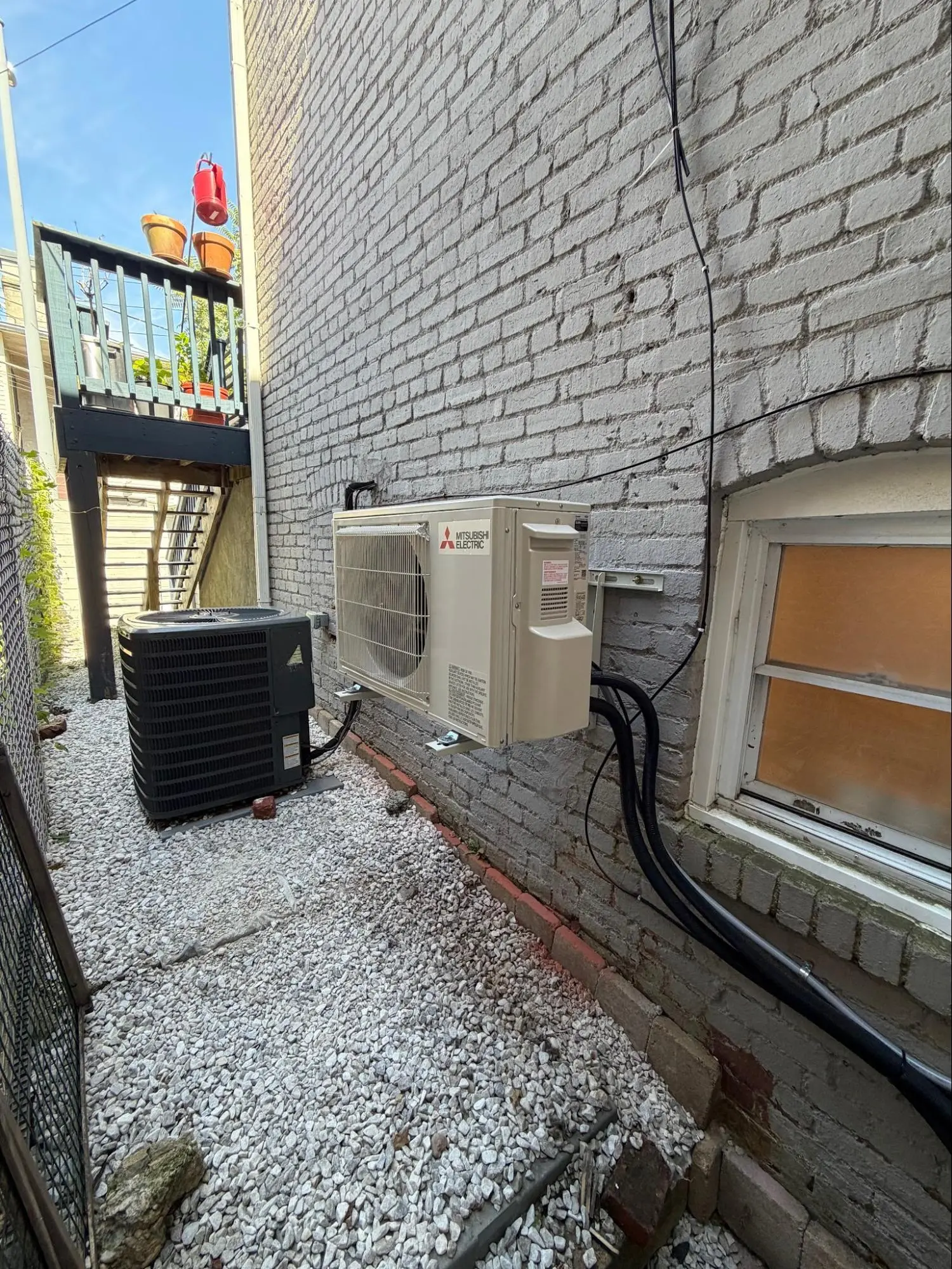
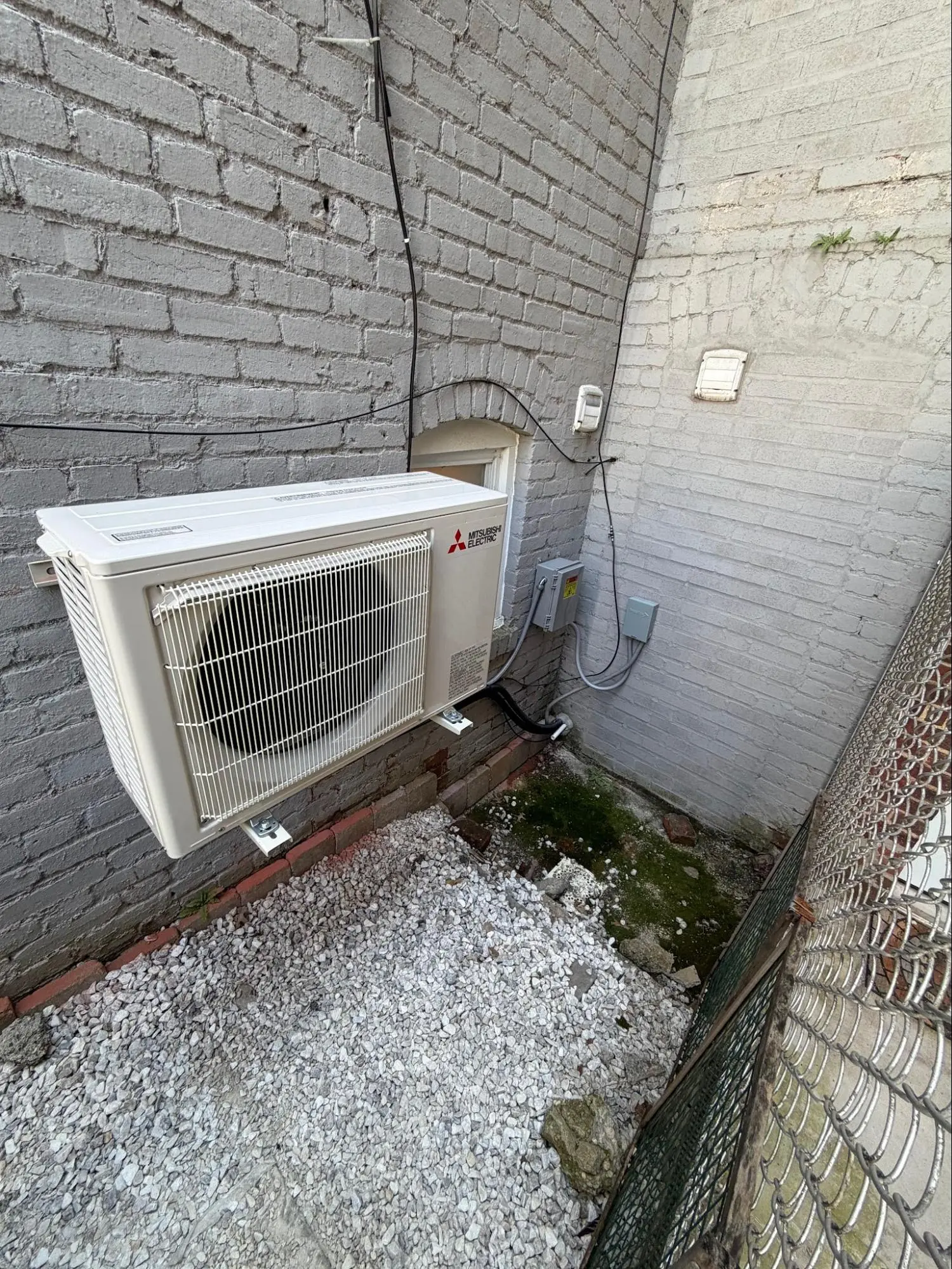
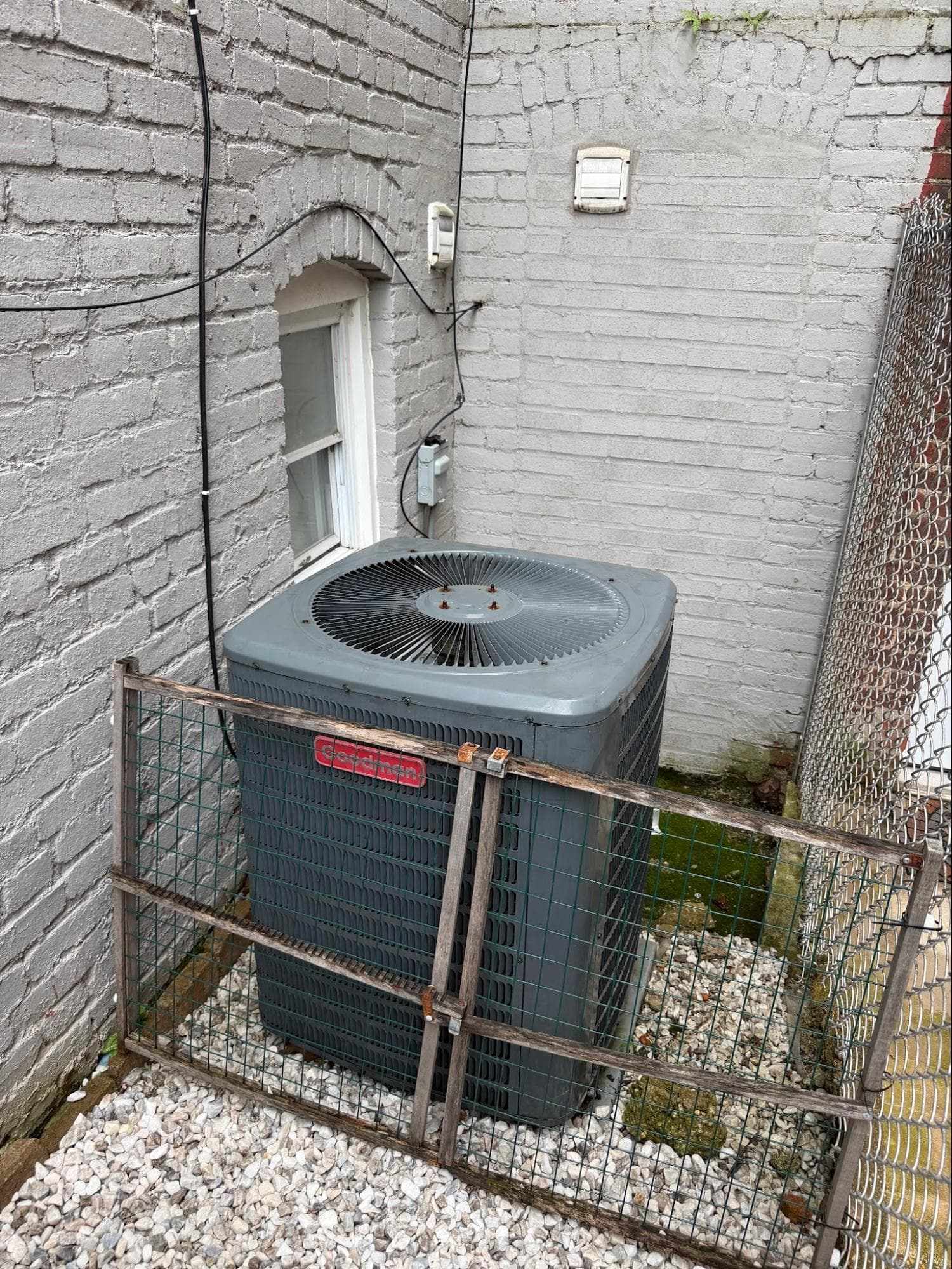
The Challenge: An Oversized System With a History of Problems
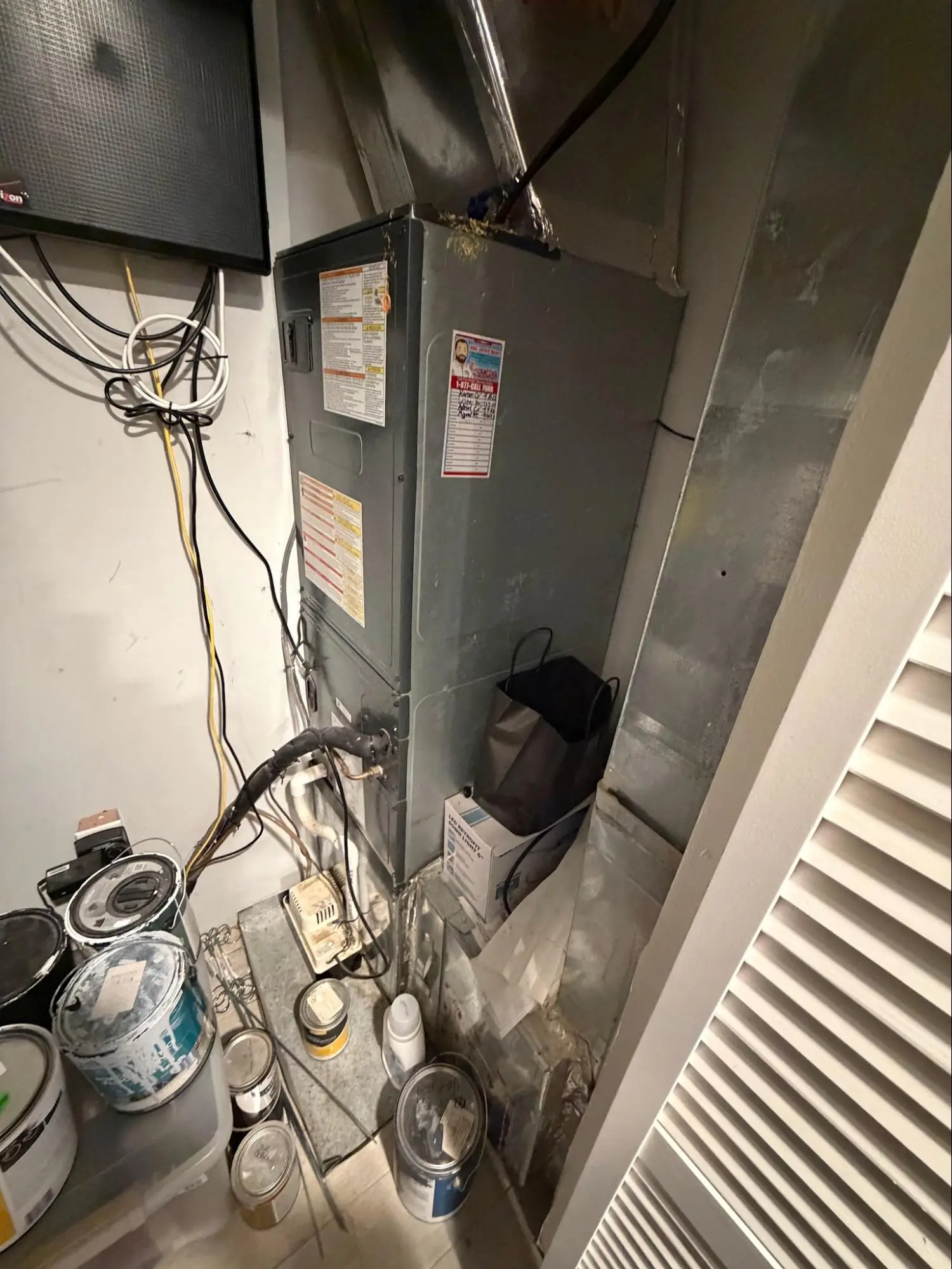
A homeowner in Washington, DC had been experiencing ongoing issues with an existing 1.5-ton heat pump system.
Approximately two years before the system ultimately failed, our technicians at Capital Heat Pumps noticed that the compressor was beginning to sound abnormal. Although the system was still operating at the time, the unusual compressor noise raised concerns about its long-term reliability.
Unfortunately, those concerns eventually became a reality.
On a late Friday afternoon, the compressor completely failed, leaving the property without a functioning heating and cooling system.
To make matters worse, the property was also being used as an Airbnb rental. The unexpected HVAC breakdown forced the homeowner to cancel a guest reservation, resulting in lost rental income and an inconvenient situation for both the homeowner and their guest.
The compressor had failed within approximately 10 years of operation, which raised an important question:
Why did the compressor fail prematurely, and what could we do to prevent the same problem from happening again?
Rather than simply replacing the failed equipment with another 1.5-ton system, we wanted to understand the underlying cause of the failure.
Our Findings: Bigger Isn’t Always Better
After evaluating the existing HVAC system, we identified several conditions that likely contributed to the premature compressor failure.
1. Oversized Equipment
The existing 1.5-ton heat pump provided approximately 18,000 BTU/h of nominal cooling capacity, significantly more than the property actually required.
When an HVAC system is oversized, it can reach the desired indoor temperature too quickly, shutting off before completing a longer, more consistent operating cycle.
2. Frequent Short Cycling
Because the equipment was oversized, the system experienced frequent short cycling, meaning it repeatedly turned on and off with relatively short run times.
These repeated starts and stops can increase mechanical and electrical stress on compressor components, potentially contributing to premature failure.
3. Undersized and Restrictive Ductwork
The existing ductwork was relatively small and restrictive for the airflow requirements of the original 1.5-ton system.
Restricted airflow can reduce system performance, increase static pressure, and create additional operating challenges.
4. High-Restriction Air Filter
The existing filtration setup added resistance to an already restrictive duct system.
Combined with the oversized equipment and limited duct capacity, this contributed to less-than-ideal airflow conditions.
After reviewing these findings, we determined that simply installing another system of the same size would not be the best long-term solution.
Manual J Load Calculation: Understanding What the Property Actually Needed
Before recommending replacement equipment, Capital Heat Pumps performed a Manual J load calculation to determine the property’s actual heating and cooling requirements.
The results revealed a significant difference between the existing equipment capacity and the building’s calculated load.
| System Information | Capacity |
|---|---|
| Existing heat pump | 18,000 BTU/h (1.5 tons) |
| Calculated cooling load | 7,000 BTU/h |
| Calculated heating load | 11,000 BTU/h |
| Recommended replacement | Mitsubishi 12,000 BTU heat pump |
The existing system’s nominal cooling capacity was more than twice the calculated cooling load.
This confirmed that the property did not need another 1.5-ton heat pump.
Instead, we recommended a smaller system that could better match the property’s heating and cooling demands while working more effectively with the existing ductwork.
Our goal was not simply to replace the failed compressor. It was to correct the underlying equipment-sizing problem and provide a more reliable, comfortable HVAC solution.
Three Options: Finding the Right Solution for the Homeowner
After diagnosing the failed compressor and evaluating the overall condition of the HVAC system, Capital Heat Pumps presented the homeowner with three options.
We wanted the homeowner to understand the advantages, limitations, and long-term considerations of each option before making a decision.
Option 1: Replace the Failed Compressor Only
The first option was to replace the failed compressor while keeping the existing 1.5-ton heat pump system.
Although this repair would restore operation, it would not correct the underlying issues that likely contributed to the original compressor failure.
The equipment would remain oversized, the ductwork would still be restrictive, and the system could continue experiencing frequent short cycling.
We explained that replacing the compressor alone might resolve the immediate breakdown without addressing the conditions that contributed to it.
Option 2: Install a Properly Sized Mitsubishi 12,000 BTU Heat Pump System — Selected by the Homeowner
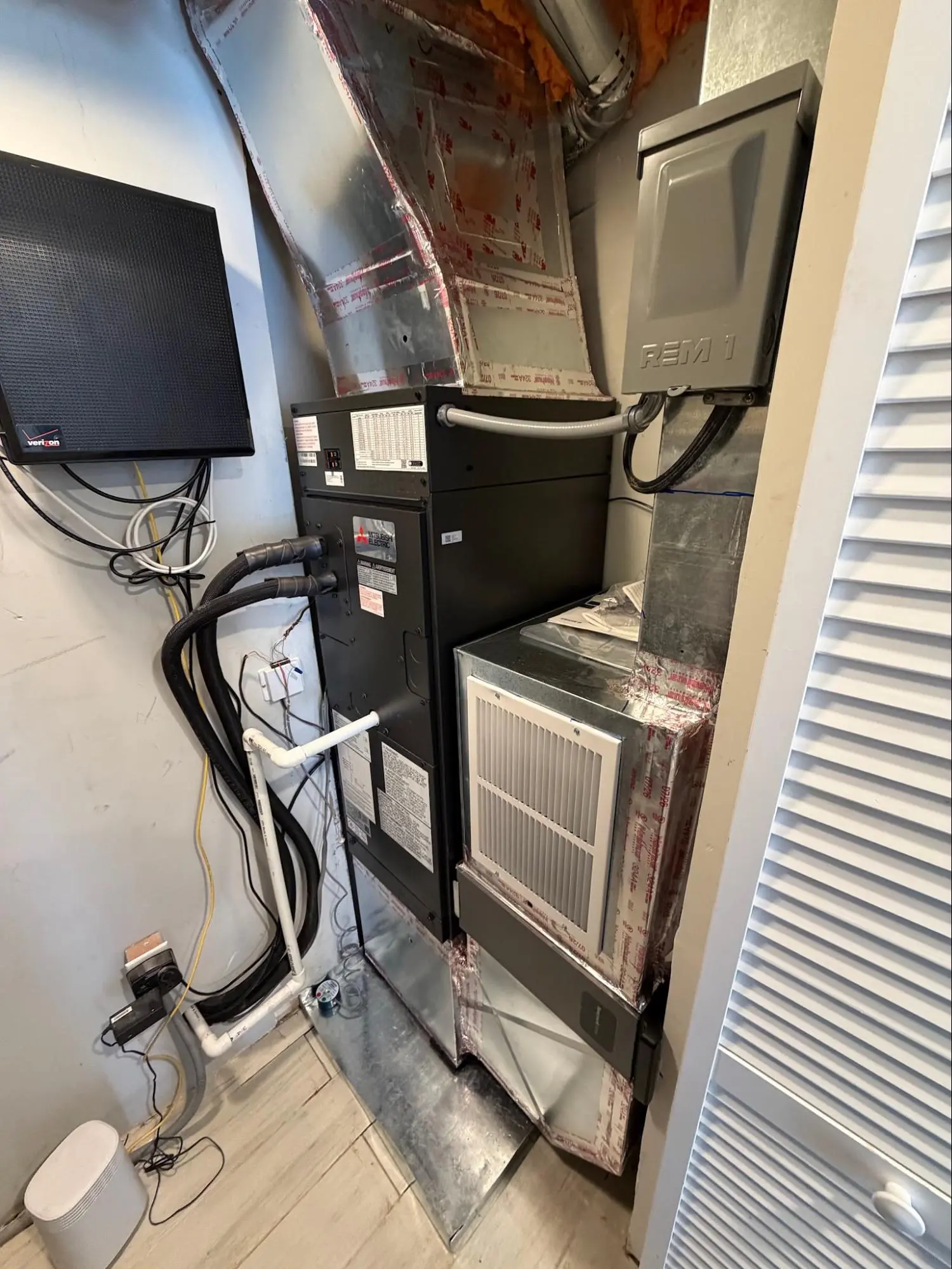
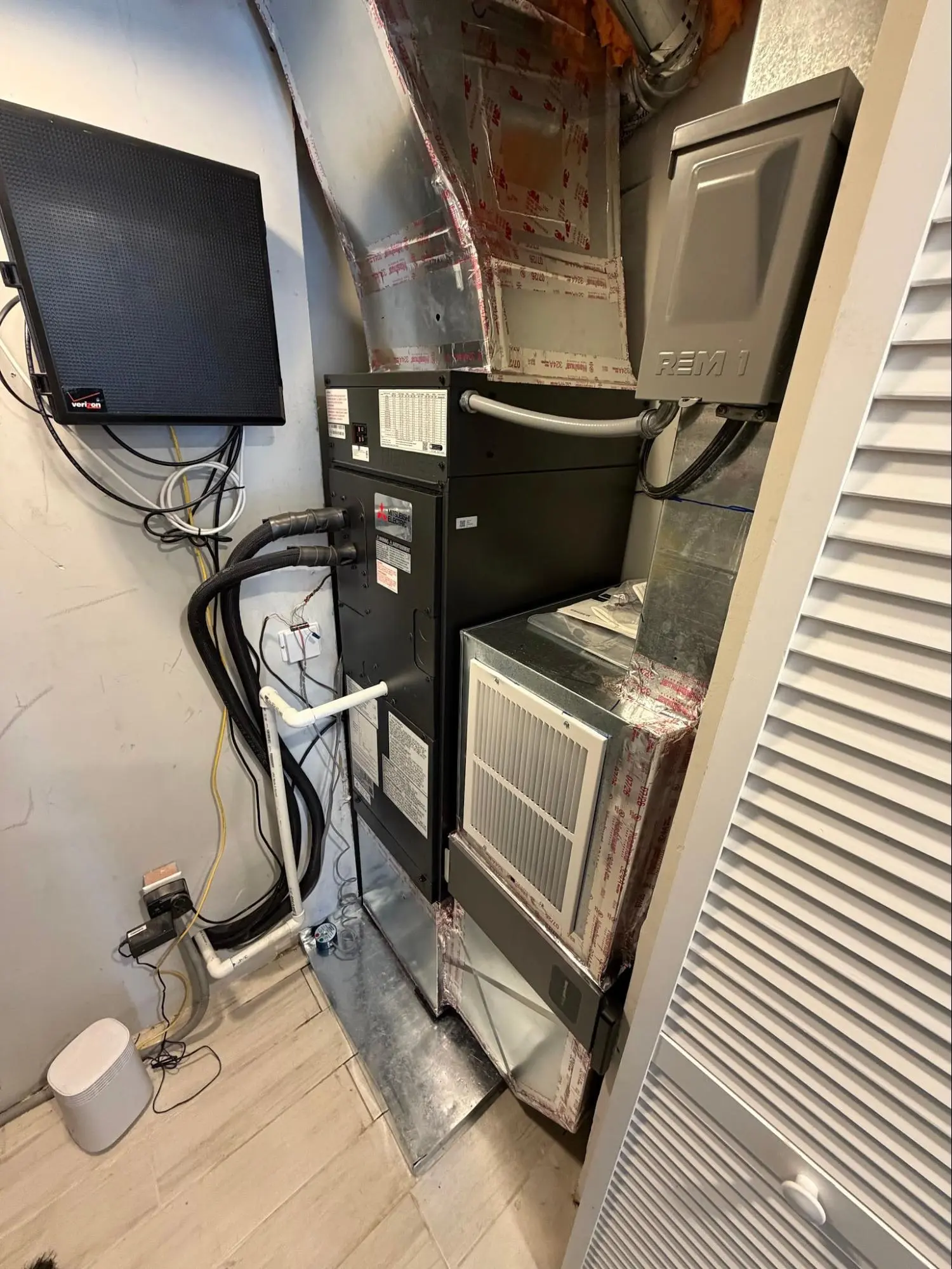
Our second option was to replace the existing equipment with a Mitsubishi 12,000 BTU heat pump system, including a matching indoor air handler and auxiliary electric heater kit.
Based on our Manual J load calculation, the property required approximately 7,000 BTU/h of cooling and 11,000 BTU/h of heating.
Rather than installing another oversized 18,000 BTU/h system, we recommended equipment with a smaller nominal capacity that was better suited to the property’s actual needs.
This option offered several advantages:
- Proper Equipment Sizing: A smaller heat pump better matched to the property’s calculated heating and cooling loads.
- Existing Ductwork Configuration: The ability to maintain the existing central ductwork setup rather than converting the property to an entirely different distribution system.
- Reduced Airflow Demand: Lower airflow requirements compared with the original oversized system, helping reduce noise and airflow-related restrictions.
- Improved Comfort: More consistent heating and cooling operation, with less frequent temperature fluctuations.
- Quieter Operation: Reduced airflow noise through the ductwork and a smaller outdoor unit.
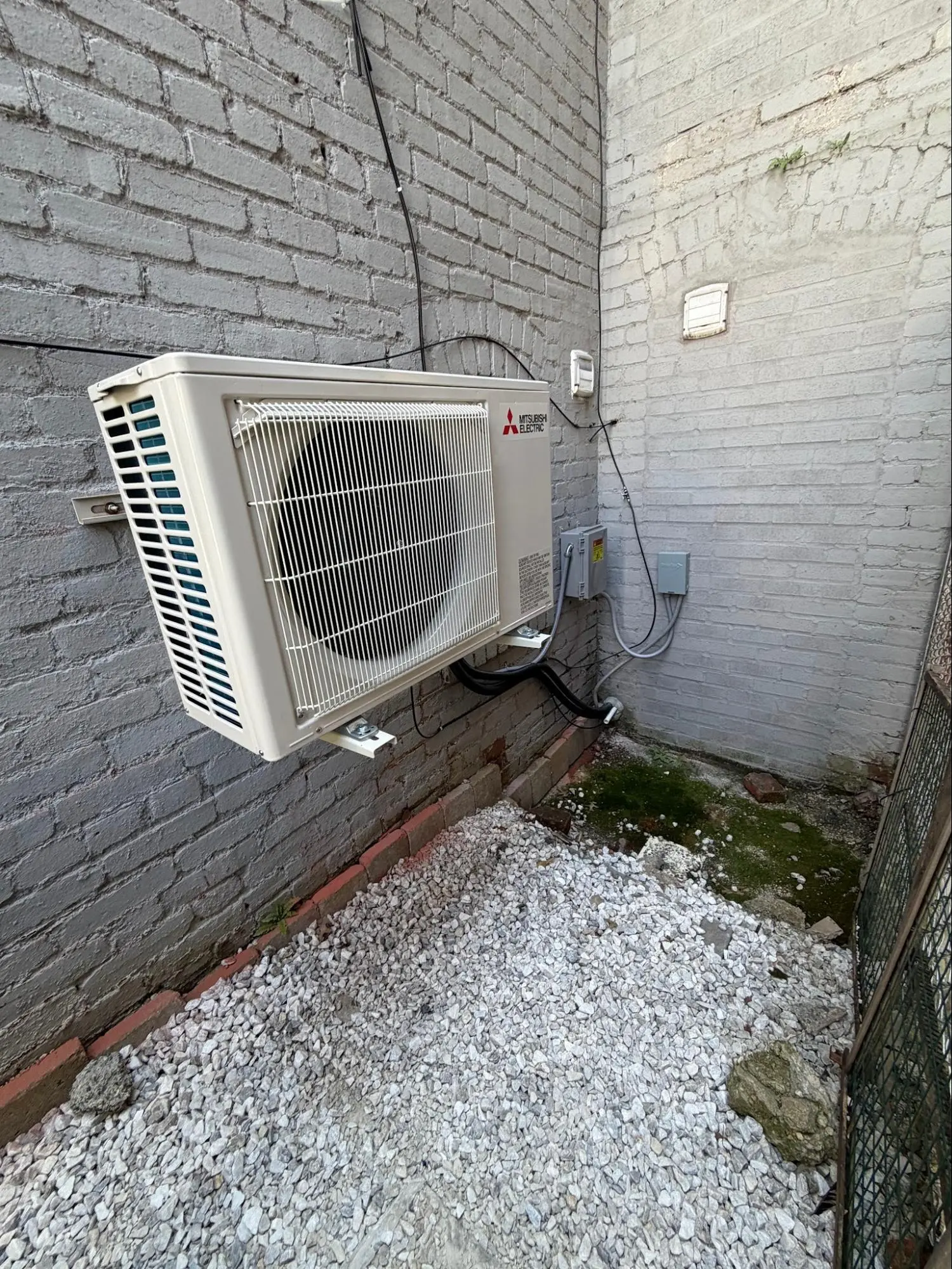
- More Backyard Space: A smaller outdoor condenser footprint, freeing up valuable space in the limited backyard.
- Long-Term Reliability: A better-matched system intended to reduce unnecessary short cycling and improve overall operating conditions.
This option provided the homeowner with a practical balance of comfort, performance, equipment sizing, and installation cost while keeping the existing central HVAC configuration.
Option 3: Install a Two-Zone Ductless Mini-Split System
Our third option was to install a two-zone ductless mini-split system.
This solution would provide independent temperature control in two separate areas of the property while eliminating reliance on the existing restrictive ductwork.
A ductless system could offer additional zoning flexibility and allow each conditioned area to operate according to its individual heating and cooling needs.
However, this option would require changing the property’s existing HVAC distribution setup.
After considering all three options, the homeowner preferred to maintain the central ducted system while correcting the equipment-sizing issues.
The homeowner ultimately selected Option 2: the Mitsubishi 12,000 BTU heat pump system with a matching air handler and auxiliary heater kit.
The Installation: A Smaller System With a Better Fit
With the homeowner’s approval, Capital Heat Pumps removed the existing oversized equipment and installed the new Mitsubishi heat pump system.
The replacement was designed to maintain the property’s existing central heating and cooling configuration while using equipment better suited to the calculated load.
One of the major advantages was the smaller outdoor unit.
In Washington, DC, where outdoor space can be limited, every square foot matters. The new heat pump occupied less space than the previous equipment, creating additional usable room in the backyard.
The smaller system also had lower airflow requirements, which helped reduce the amount of air being forced through the existing ductwork.
This was particularly important because the original system’s airflow requirements were not well matched to the duct distribution system.
By reducing equipment capacity and matching airflow more closely to the property’s needs, we were able to improve overall system operation without completely replacing the existing ductwork.
The Results: Better Comfort, Less Noise, and More Space
The new Mitsubishi heat pump provided several noticeable improvements compared with the original oversized system.
More Consistent Indoor Temperatures
The properly selected replacement system provided more consistent heating and cooling, helping maintain comfortable indoor temperatures without the rapid on-and-off operation associated with the previous oversized equipment.
Quieter Indoor Operation
With lower airflow requirements, the new system reduced air movement noise through the existing ductwork.
This created a quieter and more comfortable indoor environment, particularly important for a property also used as an Airbnb rental.
Smaller Outdoor Footprint
The new outdoor heat pump occupied less space than the previous system, giving the homeowner additional usable backyard space.
Reduced Short Cycling
By selecting equipment better matched to the building’s actual heating and cooling demands, we addressed one of the primary concerns associated with the original system: excessively short operating cycles.
Improved Overall Comfort
The combination of better equipment sizing, reduced airflow demand, and more consistent system operation helped create a more comfortable environment for the homeowner and future rental guests.
Why Proper HVAC Sizing Matters
One of the most common mistakes in HVAC replacement is assuming that the existing equipment was correctly sized when it was originally installed.
In many cases, contractors replace an older system with equipment of the same capacity without performing a new load calculation.
However, an oversized system can create several problems, including:
- Frequent short cycling and unnecessary compressor starts.
- Uneven indoor temperatures and reduced comfort.
- Increased airflow noise.
- Higher static pressure when ductwork is restrictive.
- Reduced humidity control during cooling operation.
- Additional wear on mechanical and electrical components.
In this Washington, DC property, the original 1.5-ton system was significantly larger than the calculated cooling load.
By performing a Manual J load calculation and recommending a smaller Mitsubishi heat pump, Capital Heat Pumps was able to provide a solution based on the property’s actual requirements rather than the size of the previous equipment.
The Takeaway: Sometimes the Best HVAC Upgrade Is a Smaller System
This project is a great example of why bigger HVAC equipment doesn’t always mean better performance.
The homeowner originally had a 1.5-ton heat pump that experienced frequent short cycling, restrictive airflow conditions, and ultimately premature compressor failure.
Instead of simply replacing the compressor or installing another oversized system, Capital Heat Pumps took the time to evaluate the property’s heating and cooling requirements and explain three possible solutions.
The homeowner chose a properly sized Mitsubishi 12,000 BTU heat pump system with an auxiliary heater kit, allowing them to maintain their existing central HVAC configuration while improving comfort, reducing noise, and freeing up backyard space.
At Capital Heat Pumps, we believe an HVAC replacement should be based on proper system design, not simply the size of the equipment being removed.
Our approach focuses on understanding the property, identifying the root causes of equipment problems, and recommending solutions that deliver comfort, efficiency, and long-term reliability.
Whether you’re replacing a failed compressor, upgrading an older heat pump, or experiencing uneven temperatures and short cycling, our team can help determine the right solution for your home.
Capital Heat Pumps — Properly Sized. Professionally Installed. Designed for Comfort.
Serving Washington, DC, Maryland, and the surrounding DC metropolitan area.
