
Case Study: Trane Heat Pump Replacement and Airflow Improvements in Waldorf, Maryland
How Capital Heat Pumps helped a Waldorf homeowner address recurring heat pump freeze-ups, winter electric bills exceeding $1,000, restrictive ductwork, a severely rusted drain pan, and unsafe outdoor equipment supports.

The Challenge: A Freezing Heat Pump and Electric Bills Over $1,000 Per Month
A homeowner in Waldorf, Maryland, found Capital Heat Pumps through Google while searching for a reliable HVAC contractor to resolve ongoing problems with his existing heat pump system.
During our initial conversation, the homeowner mentioned two major concerns.
First, his heat pump was constantly freezing up, affecting its ability to heat and cool the home properly.
Second, during the winter heating season, he frequently had to manually switch over to auxiliary electric heat just to keep the home comfortable.
Because electric resistance heat generally consumes significantly more electricity than a properly operating heat pump, the homeowner was experiencing monthly electric bills exceeding $1,000 during the winter.
The homeowner was frustrated with the system’s performance and wanted a long-term solution rather than another temporary repair.
Instead of simply recommending a new heat pump, our goal was to evaluate the entire HVAC installation, identify potential causes of the performance problems, and develop a solution that would improve comfort, reliability, and operating efficiency.
Our Inspection: The Problems Went Beyond the Heat Pump
When our technicians arrived, we performed a detailed inspection of the existing HVAC system, including the attic-mounted fan coil unit, return ductwork, condensate drainage system, and outdoor heat pump equipment.
During our inspection, we discovered several problems that needed attention.
1. Undersized Return Air Ductwork
The existing indoor fan coil unit was installed in the attic.
After inspecting the ductwork, we discovered that the return air system was undersized and restrictive.
Return air is an essential part of HVAC operation because it allows air from the living space to circulate back through the equipment for heating and cooling.
When return ductwork is too small, the system can struggle to move the required amount of air.
Restricted airflow can contribute to several issues, including:
- Reduced heating and cooling performance.
- Increased static pressure within the ductwork.
- Excessive airflow noise.
- Reduced operating efficiency.
- Indoor evaporator coil freezing during cooling operation.
- Additional stress on HVAC components.
We determined that simply installing another heat pump without addressing the restrictive return ductwork would leave an important installation problem unresolved.
2. Severely Rusted Emergency Drain Pan and Exterior Siding Stains
During our inspection of the attic-mounted fan coil unit, we discovered that the emergency condensate drain pan was severely rusted and deteriorating.
The corrosion had become so extensive that rust-contaminated water draining through the emergency condensate line was leaving visible rust stains on the home’s exterior siding.
The emergency drain line was intentionally routed to discharge outside near a window.
This arrangement serves an important purpose. If the primary condensate drain becomes clogged or fails, water entering the emergency pan can discharge through the secondary drain line.
Because the discharge is located near a window, the homeowner has a better opportunity to notice the water and recognize that the condensate drainage system may need attention.
However, in this case, the deteriorated metal pan was causing rust deposits to wash through the drain line and stain the exterior siding.
What was originally intended to serve as a warning system had also become a source of visible staining on the home.
Beyond the cosmetic damage, the severely rusted pan presented another concern.
Because the indoor fan coil was located in the attic, a deteriorated drain pan could eventually develop holes and allow water to leak into the ceiling, potentially damaging drywall, insulation, and other building materials.
We recommended replacing the emergency drain pan and addressing the condensate drainage and overflow safety protection as part of the new installation.
3. Rusted Outdoor Heat Pump Wall Brackets
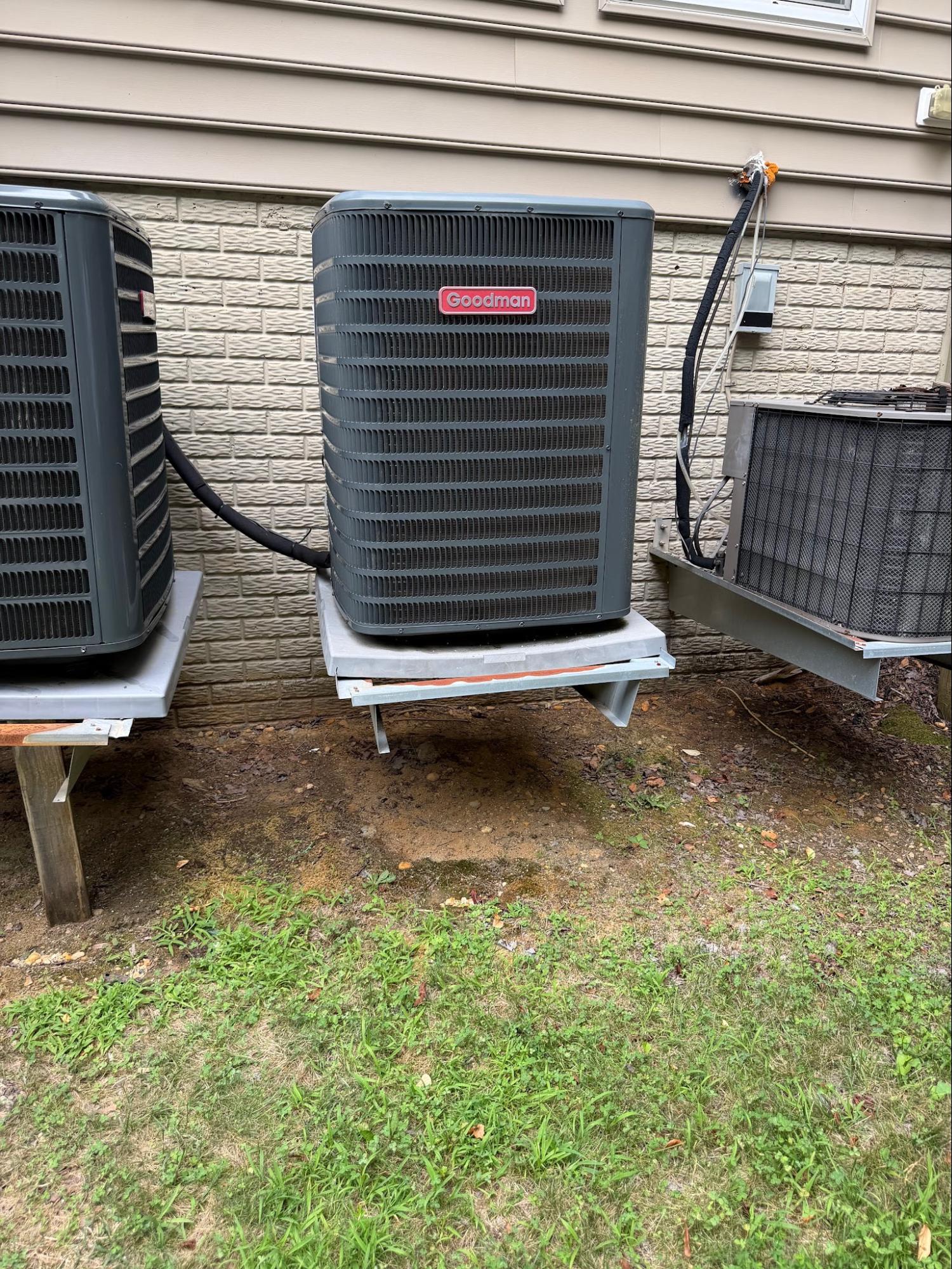
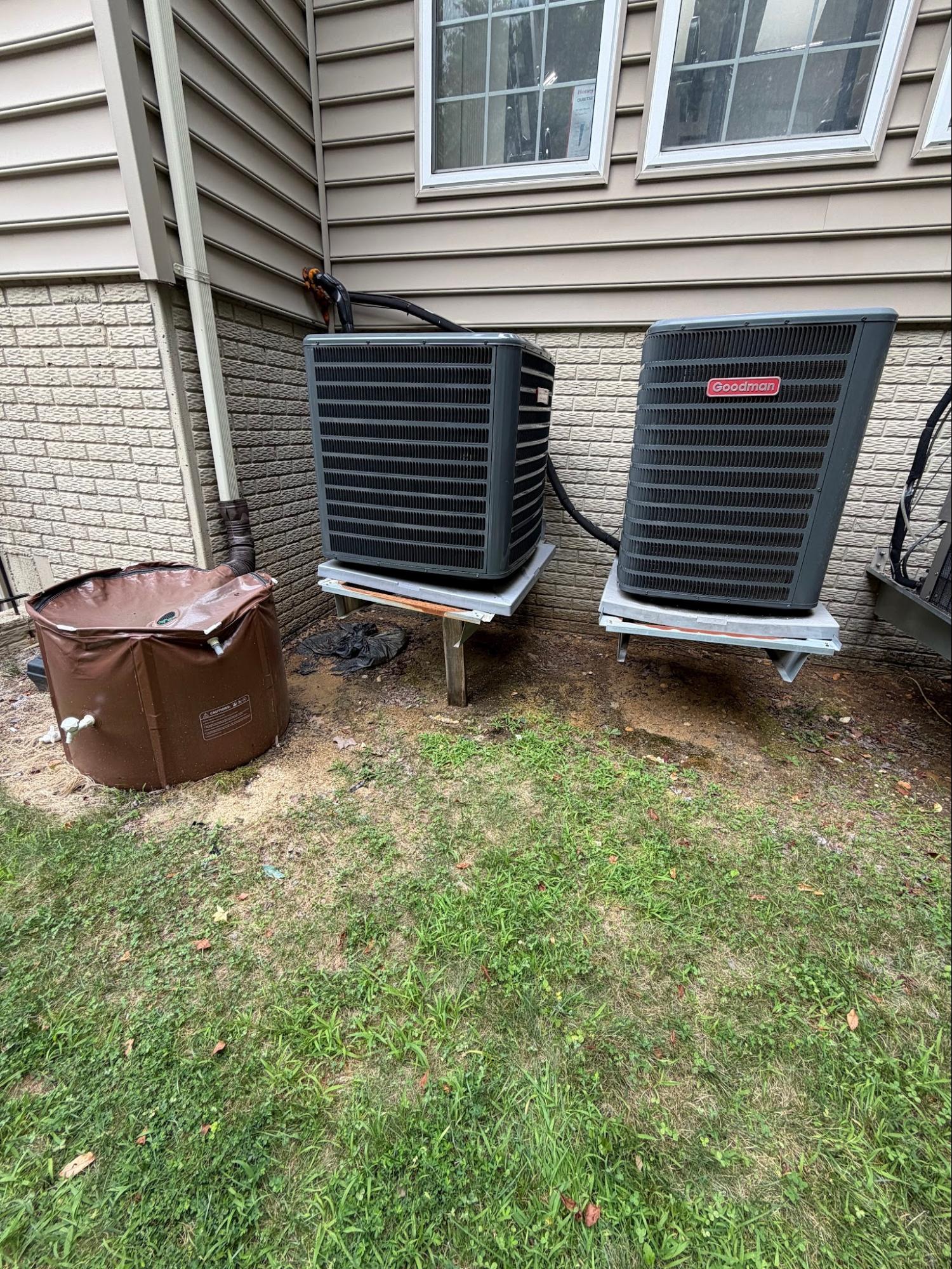
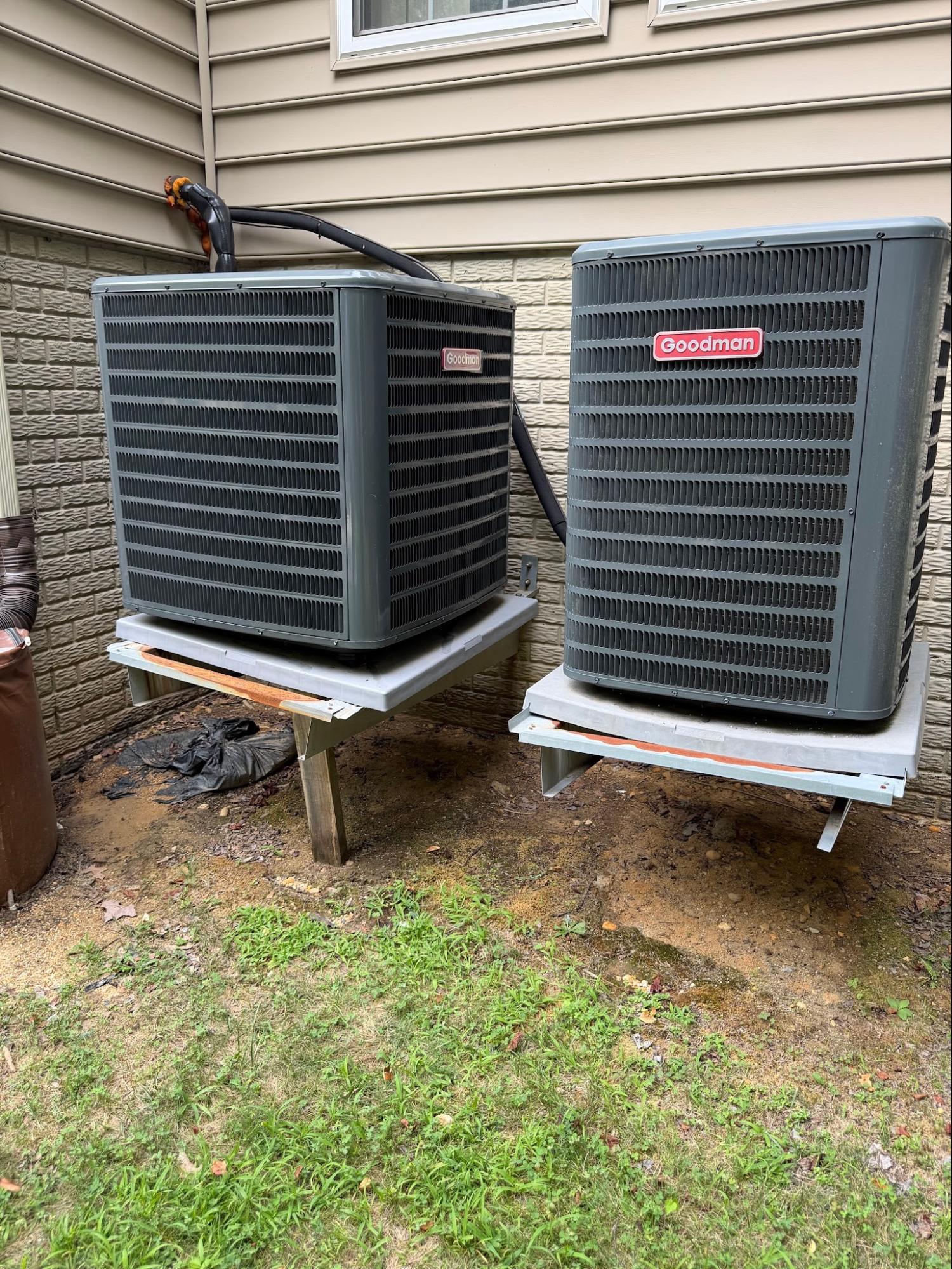
During our inspection of the outdoor equipment, we found that the existing wall-mounted heat pump brackets had significant rust and deterioration.
This raised concerns about the long-term stability of the equipment.
Outdoor heat pumps can be heavy, and their mounting brackets must be properly secured and capable of supporting the equipment.
Rather than reusing the deteriorated bracket, we recommended installing a new wall-mount support for the replacement heat pump.
4. A Recently Installed Neighboring Heat Pump With Support Concerns
Another issue caught our attention during the outdoor inspection.
Immediately beside the heat pump we were evaluating was another outdoor unit that had been replaced by a different HVAC contractor approximately six months earlier.
Despite the relatively recent installation, the homeowner was concerned about the quality and stability of the mounting arrangement.
In fact, he had placed a piece of wood underneath the neighboring outdoor unit because he was worried that the equipment might fall.
The homeowner explained that he did not want to contact the previous installation company again because he was dissatisfied with the quality of their work.
Rather than recommending that he pay to completely remove and reinstall a heat pump that was only six months old, we proposed a more practical solution.
We recommended improving and reinforcing the existing mounting support to address the stability concerns without unnecessarily replacing or reinstalling the recently installed equipment.
Our Recommendation: A Complete HVAC Replacement With Installation Improvements
After evaluating the existing equipment and discussing our findings with the homeowner, Capital Heat Pumps recommended replacing the problematic heat pump system with new Trane equipment.
However, we explained that installing new equipment alone would not address all the issues discovered during our inspection.
For the replacement to provide the best possible long-term performance, we also needed to improve the return airflow, replace the deteriorated emergency drain pan, and address the outdoor mounting concerns.
Our recommended scope of work included:
- Replacing the existing heat pump system with a new Trane heat pump system.
- Installing an additional return air duct to improve airflow.
- Replacing the severely rusted emergency condensate drain pan.
- Addressing the condensate drainage and overflow safety protection.
- Installing a new outdoor wall-mount bracket for the replacement Trane heat pump.
- Reinforcing the mounting support for the neighboring heat pump installed approximately six months earlier.
The homeowner approved the recommended work, allowing us to address the equipment replacement and surrounding installation concerns together.
The Installation: Correcting the Problems, Not Just Replacing the Equipment
Once the project was approved, Capital Heat Pumps completed the heat pump replacement and all the recommended improvements.
New Trane Heat Pump System
We removed the existing equipment and installed a new Trane heat pump system.
The replacement was intended to restore reliable heating and cooling performance and reduce the homeowner’s need to rely unnecessarily on expensive auxiliary electric heat.
While auxiliary electric heat is an important backup feature in many heat pump systems, it should not have to compensate continuously for a poorly performing primary heating system.
Our goal was to provide equipment that could handle the home’s heating and cooling requirements while operating more effectively with the improved airflow configuration.
Additional Return Air Duct Installation
One of the most important improvements was the installation of an additional return air duct.
The original return configuration was restrictive and limited the amount of air that could circulate back to the indoor fan coil unit.
By adding another return pathway, we helped reduce airflow restrictions and improve air circulation through the HVAC system.
This improvement was particularly important because proper airflow directly affects heat transfer, equipment performance, and indoor comfort.
Instead of connecting the new Trane system to the same restrictive return setup without modification, we addressed an existing problem that could otherwise affect the replacement equipment.
New Emergency Condensate Drain Pan
We removed and replaced the severely rusted emergency drain pan beneath the attic-mounted indoor unit.
The original pan had deteriorated to the point that rust deposits were being carried through the secondary drain line and staining the home’s exterior siding.
Replacing the pan eliminated that deteriorated component as a source of rust-contaminated condensate drainage.
We also addressed the condensate drainage and overflow safety protection, maintaining the visible emergency drain discharge near the window.
This arrangement allows the homeowner to recognize abnormal drainage conditions while helping protect the attic and ceiling from potential condensate overflow.
New Outdoor Heat Pump Wall-Mount Bracket
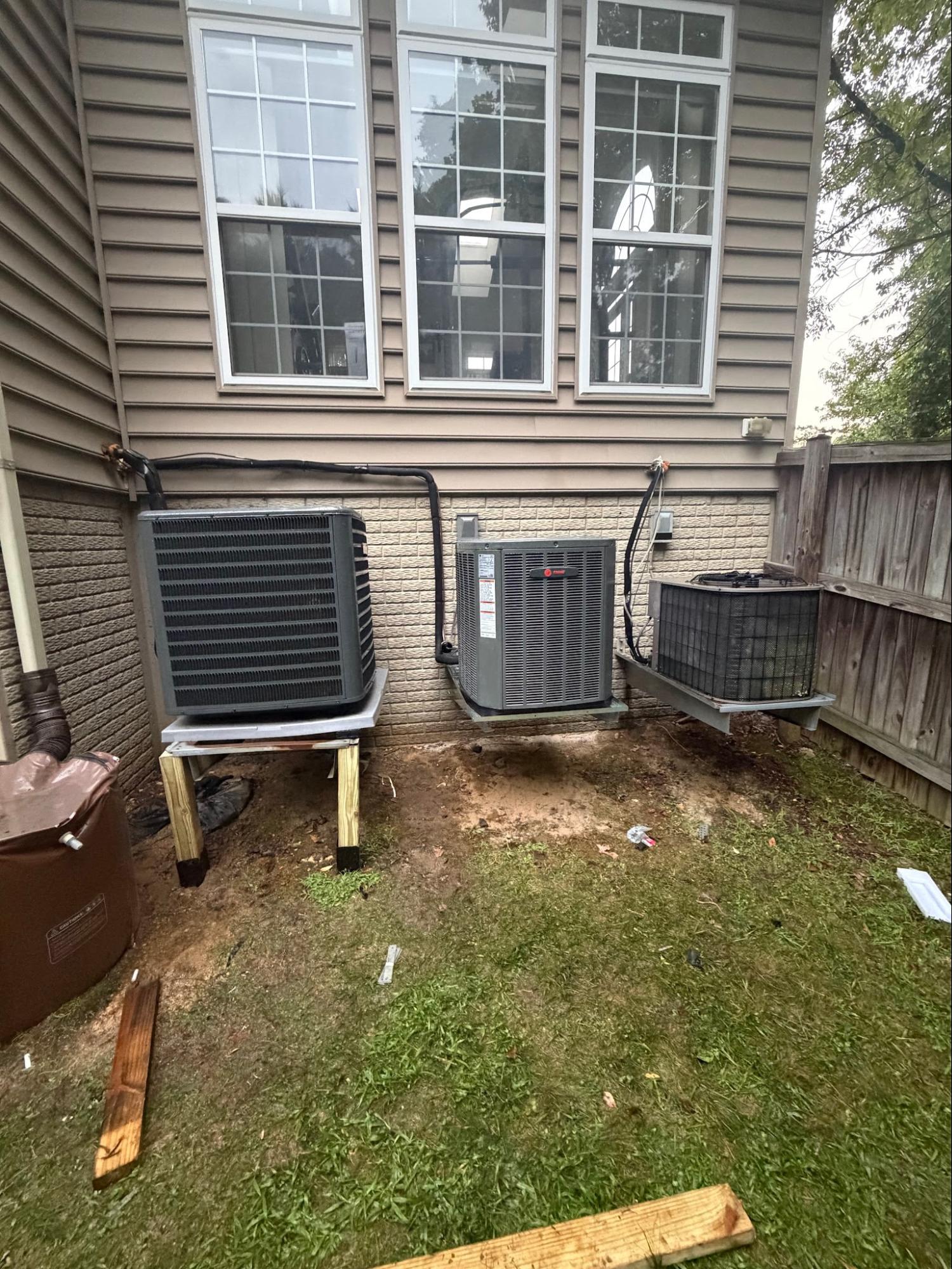
The existing outdoor mounting bracket had significant corrosion, so we replaced it with a new bracket for the Trane outdoor unit.
This provided a more secure mounting arrangement and eliminated the need to reuse the deteriorated support.
Proper outdoor equipment mounting is an important part of a professional HVAC installation, especially when the unit is elevated above ground level.
Reinforcing the Neighboring Heat Pump Support
We also completed the additional support work on the neighboring outdoor heat pump.
This unit had been installed by another contractor approximately six months earlier, but the homeowner was concerned enough about its stability that he had placed a piece of wood underneath it.
Rather than removing the entire unit and charging the homeowner for a complete reinstallation, we improved and reinforced its existing support.
This provided a more secure mounting arrangement while preserving the relatively new equipment.
It also addressed an important concern that was separate from the original heat pump replacement.
For us, completing the job properly meant addressing the installation conditions we discovered—not simply installing the new equipment and ignoring the surrounding problems.
The Results: A More Complete HVAC Solution
By the end of the project, the homeowner had more than just a new heat pump.
We had completed several improvements designed to support better comfort, reliability, airflow, drainage protection, and equipment stability.
Improved Airflow
The additional return air duct provided a less restrictive path for air to circulate back through the new HVAC system, helping improve overall airflow conditions.
New Trane Heating and Cooling Equipment
The homeowner received a new Trane heat pump system intended to provide more dependable heating and cooling performance.
Reduced Need for Auxiliary Electric Heat
The replacement addressed the poorly performing heat pump that had forced the homeowner to rely heavily on electric resistance heat during winter.
The new system was intended to reduce unnecessary backup heat operation and help control heating costs. Actual savings depend on weather conditions, thermostat settings, electricity rates, and system performance.
Improved Condensate Protection
The severely rusted emergency drain pan was replaced, removing the deteriorated component that had contributed to rust staining on the exterior siding.
The condensate drainage and overflow protection arrangement was also addressed to help protect the home from potential water damage.
New Outdoor Equipment Support
The replacement Trane heat pump was installed on a new wall-mount bracket instead of the deteriorated original support.
Improved Support for the Neighboring Unit
We reinforced the neighboring heat pump’s mounting arrangement, addressing the homeowner’s concerns without requiring a complete removal and reinstallation of the recently installed equipment.
Why Proper HVAC Installation Matters
This project demonstrates an important lesson for homeowners:
The quality of an HVAC installation matters just as much as the brand of equipment being installed.
Even high-quality equipment can struggle to perform properly when connected to restrictive ductwork or installed without adequate drainage protection and equipment support.
In this case, the homeowner was dealing with multiple problems at the same time.
The existing heat pump was repeatedly freezing up, the return ductwork was undersized, the emergency drain pan was severely rusted and staining the exterior siding, and the outdoor mounting hardware had deteriorated.
Additionally, a neighboring heat pump installed just six months earlier had mounting concerns significant enough that the homeowner felt the need to place a piece of wood underneath it.
These issues highlight why an HVAC replacement should involve more than simply removing old equipment and installing new equipment in the same location.
A proper replacement should include evaluating the entire installation, identifying conditions that could affect performance, and correcting those issues whenever possible.
The Takeaway: We Don’t Just Replace Equipment. We Address the Problems Behind It.
When this Waldorf, Maryland homeowner found Capital Heat Pumps through Google, he was dealing with recurring heat pump freeze-ups, excessive use of electric backup heat, and winter electric bills exceeding $1,000 per month.
After inspecting the system, we discovered that the problems extended beyond the heat pump itself.
The existing installation had undersized return ductwork, a severely rusted emergency drain pan that was contributing to stains on the exterior siding, deteriorated outdoor mounting brackets, and a neighboring heat pump with support concerns.
Instead of performing a basic equipment changeout, we recommended and completed a more comprehensive solution.
We installed a new Trane heat pump system, added an additional return air duct, replaced the emergency drain pan, addressed the condensate drainage and safety protection, installed a new outdoor wall-mount bracket, and reinforced the neighboring heat pump support.
The result was a more complete HVAC installation designed to improve airflow, restore dependable heating and cooling, and address the homeowner’s concerns about equipment stability and potential water damage.
At Capital Heat Pumps, we believe homeowners deserve more than a simple equipment replacement. They deserve an HVAC contractor who takes the time to understand the problems, explain the solutions, and complete the work with attention to detail.
Whether your heat pump is constantly freezing up, your winter electric bills are unusually high, or you’re concerned about the quality of your existing HVAC installation, Capital Heat Pumps can help evaluate your system and recommend the right solution.
Capital Heat Pumps — Proper System Design. Quality Installation. Reliable Comfort.
Proudly serving Waldorf, Maryland, Southern Maryland, Washington, DC, and the surrounding metropolitan area.
