
Water-Source Heat Pump Replacement in National Harbor, MD – High-Rise Condo HVAC Upgrade
Replacing a 25-year-old water-source heat pump with a modern system, new water connection hoses, and modified ductwork in a high-rise condominium near National Harbor, Maryland.
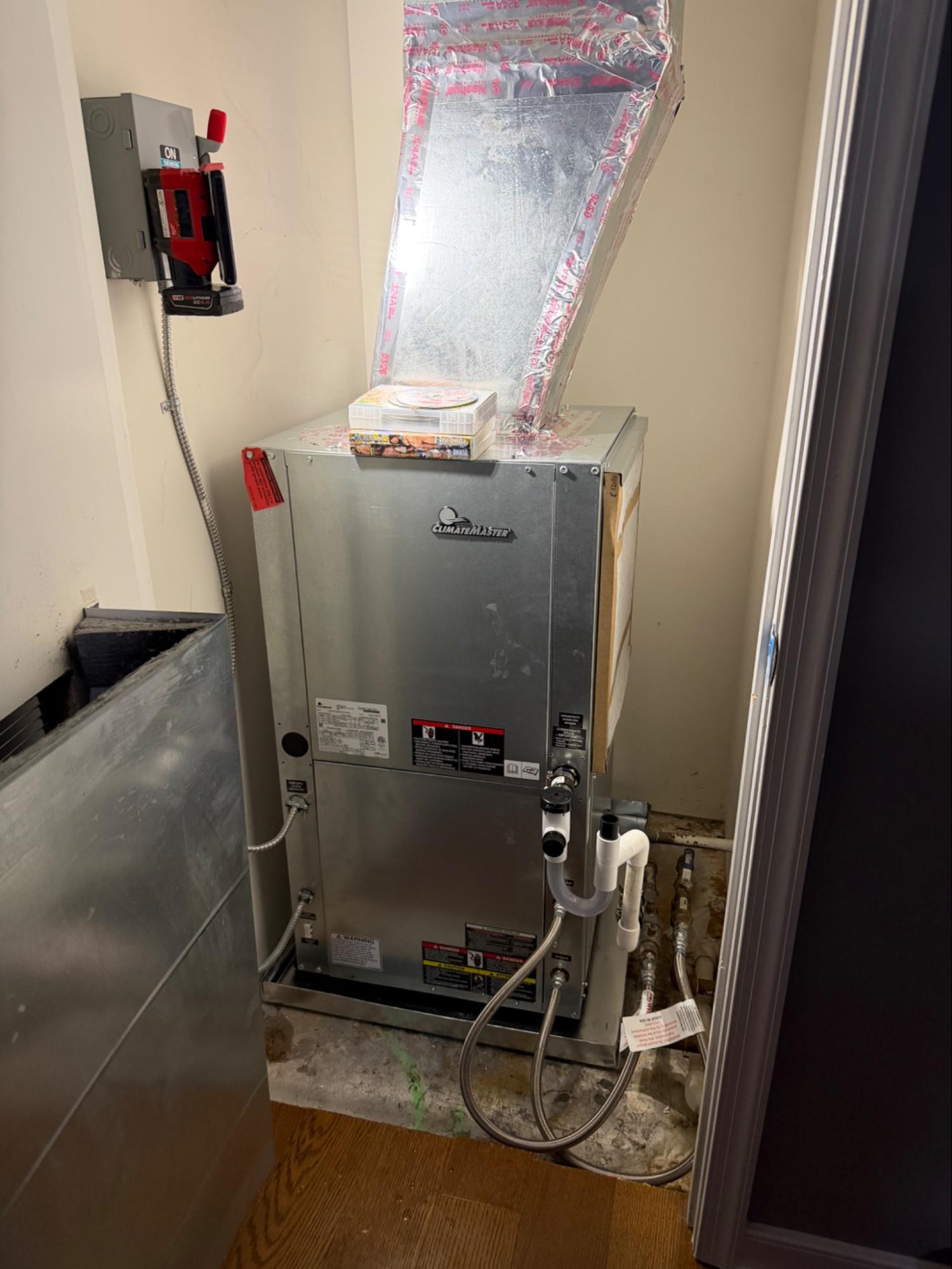
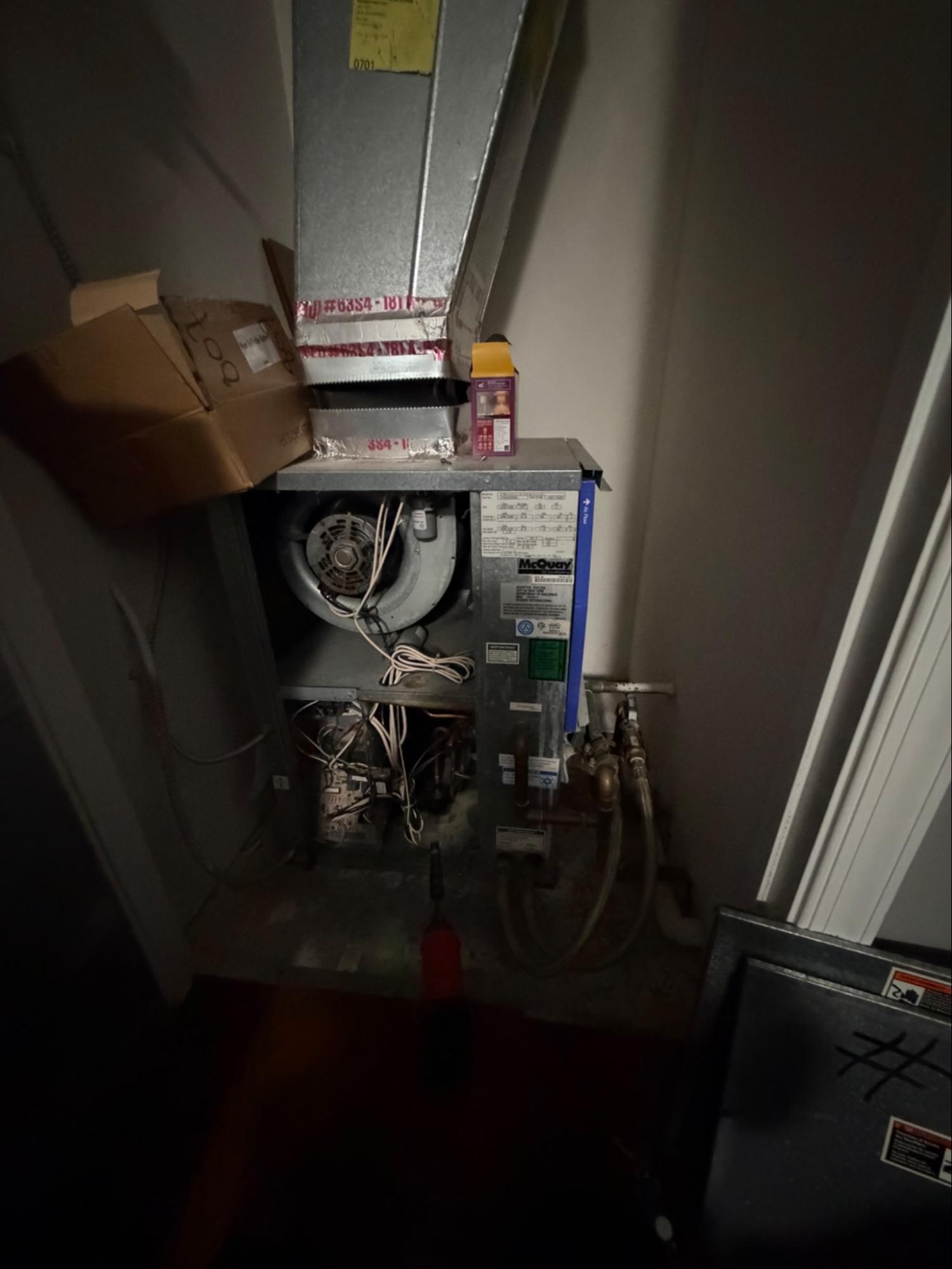
Project Location: National Harbor, Maryland
Property Type: High-Rise Residential Condominium
Service: Water-Source Heat Pump Replacement
Equipment Installed: New Water-Source Heat Pump, Water Hose Connection Kit & Ductwork Modifications
Existing Equipment: Water-Source Heat Pump Over 25 Years Old
Building System: Central Cooling Tower Water Loop
The Challenge: A 25-Year-Old Water-Source Heat Pump with a Refrigerant Leak
A condominium owner in a high-rise building near National Harbor, Maryland, was experiencing problems with an aging heating and cooling system.
Unlike traditional residential HVAC systems that use an outdoor air conditioning condenser or air-source heat pump, this building utilized a central water-loop system connected to a cooling tower.
Each condominium has its own water-source heat pump that provides heating and cooling to the individual residence while exchanging heat with the building’s shared water system.
During our evaluation, Capital Heat Pumps discovered that the existing water-source heat pump had developed a refrigerant leak in the evaporator coil.
The equipment was also more than 25 years old, making its age and overall condition important factors when evaluating repair options.
A leaking refrigerant coil can cause several problems, including:
- Reduced heating and cooling performance.
- Inconsistent indoor temperatures.
- Longer equipment run times.
- Reduced operating efficiency.
- Additional stress on the compressor.
- Potentially expensive repairs involving aging components.
Given the system’s age and the location of the refrigerant leak, we recommended replacing the equipment rather than investing in a major repair.
Our Recommendation: Replacement Instead of Repairing Aging Equipment
At Capital Heat Pumps, we evaluate HVAC equipment based on its age, condition, repair requirements, and long-term reliability.
In this case, the existing water-source heat pump had already operated for more than 25 years.
Repairing the leaking evaporator coil would have required investing in an aging system with other original components that could potentially require attention in the future.
Water-source heat pumps also require equipment compatibility with the building’s existing water-loop system, making proper replacement selection particularly important.
After discussing the condition of the equipment and our recommendation, the homeowner decided to move forward with a complete water-source heat pump replacement.
The goal was to install updated equipment that would integrate with the high-rise building’s existing infrastructure while improving the reliability and serviceability of the condominium’s heating and cooling system.
Our Solution: New Water-Source Heat Pump Installation
1. Replacing the Existing Water-Source Heat Pump
Our technicians removed the aging water-source heat pump and installed a new replacement unit.
Unlike a conventional air-source heat pump, a water-source heat pump uses water circulating through a heat exchanger to transfer heat between the equipment and the building’s shared water loop.
This configuration is common in high-rise condominium buildings where individual outdoor condensers are not practical.
The replacement equipment was selected to work with the building’s water-source HVAC configuration.
By replacing the complete unit, the homeowner could move away from the aging equipment and its leaking evaporator coil.
2. Installing a New Water Hose Connection Kit
As part of the replacement, we installed a new water hose connection kit to connect the heat pump to the building’s existing water-loop piping.
These connections are essential because water must circulate through the heat pump’s heat exchanger for the equipment to provide heating and cooling.
The new hose connections helped accommodate the replacement unit and establish the necessary connections to the existing water piping.
Proper water-side connections are important for:
- Maintaining appropriate water circulation through the heat pump.
- Reducing the potential for connection leaks.
- Accommodating equipment movement and vibration where flexible hoses are used.
- Supporting future equipment maintenance and service access.
- Maintaining compatibility with the building’s shared water-loop system.
3. Modifying the Existing Ductwork
Because the replacement water-source heat pump had different connection requirements from the original equipment, modifications to the existing ductwork were necessary.
Our team adjusted the duct connections to accommodate the new unit and properly connect it to the condominium’s existing air distribution system.
Rather than replacing the entire duct system, we focused on making the modifications necessary to integrate the new equipment.
Proper duct connections help support airflow, heating and cooling performance, and efficient system operation.
4. Integrating with the High-Rise Building’s Cooling Tower System
One of the most important aspects of this installation was understanding how the condominium’s heating and cooling equipment interacted with the building’s central mechanical system.
The high-rise building utilized a shared water loop served by a cooling tower and associated building mechanical equipment.
The building’s central system manages the water-side infrastructure, while the individual condominium’s water-source heat pump uses that circulating water to exchange heat.
For this project, Capital Heat Pumps handled the individual heat pump replacement, new hose connections, and necessary ductwork modifications.
The building was responsible for the central water-loop and cooling tower infrastructure.
This distinction is important because high-rise HVAC replacements often involve coordination between the individual homeowner’s contractor and the building’s mechanical operations.
Why High-Rise Water-Source Heat Pump Replacements Require Specialized Knowledge
Replacing a water-source heat pump in a high-rise condominium is different from replacing a traditional residential air conditioner or furnace.
These systems must operate within the building’s existing mechanical infrastructure.
Several factors must be considered, including:
- Water-loop compatibility: The replacement equipment must be suitable for the building’s circulating water system and operating conditions.
- Equipment dimensions: Mechanical closets in high-rise condominiums often have limited installation space.
- Ductwork connections: Replacement equipment may require custom duct transitions or modifications.
- Water piping connections: Proper hose connections and fittings are essential for reliable operation.
- Building coordination: Work involving the shared water loop may require coordination with building management or maintenance personnel.
At Capital Heat Pumps, we understand the importance of evaluating these requirements before completing a water-source heat pump replacement.
The Results: Updated HVAC Equipment for a High-Rise Condominium
The completed installation replaced an aging, leaking water-source heat pump with modern equipment compatible with the condominium’s existing HVAC configuration.
Project highlights included:
- Identified a refrigerant leak in the evaporator coil.
- Evaluated a water-source heat pump more than 25 years old.
- Recommended complete equipment replacement instead of an expensive repair to aging equipment.
- Removed the existing water-source heat pump.
- Installed a new replacement water-source heat pump.
- Installed a new water hose connection kit.
- Modified the existing ductwork to accommodate the replacement equipment.
- Connected the new equipment to the condominium’s existing water-loop infrastructure.
- Worked within the requirements of a high-rise building served by a central cooling tower system.
The project provided the homeowner with updated heating and cooling equipment while retaining the building’s existing central water-loop infrastructure.
Water-Source vs. Geothermal Heat Pumps: What’s the Difference?
Water-source and geothermal heat pumps operate using similar heat-transfer principles, but the source of the circulating water and how the system manages heat can differ.
A geothermal heat pump typically exchanges heat with the ground through a buried loop system or groundwater source.
A water-source heat pump in a high-rise building commonly exchanges heat with a shared water loop connected to a cooling tower and other central mechanical equipment.
Both systems use refrigerant and a heat exchanger to provide heating and cooling, but they are not necessarily the same type of installation.
For this National Harbor project, the equipment was a water-source heat pump connected to the high-rise building’s central cooling tower water loop, rather than a traditional ground-loop geothermal installation.
Need a Water-Source Heat Pump Replacement in National Harbor, MD?
At Capital Heat Pumps, we specialize in residential and high-rise condominium HVAC solutions, including water-source heat pump replacements, heat pump diagnostics, refrigerant leak evaluations, ductwork modifications, and complete HVAC system installations.
Whether your condominium’s water-source heat pump is leaking refrigerant, experiencing performance problems, or approaching the end of its service life, our team can help evaluate your replacement options.
We proudly serve National Harbor, Oxon Hill, Fort Washington, Prince George’s County, and the surrounding Maryland and DC Metro areas.
Contact Capital Heat Pumps today to schedule a water-source heat pump evaluation or request an estimate for your condominium HVAC replacement.
Capital Heat Pumps — Specialized HVAC Solutions for Homes, Condominiums, and High-Rise Buildings.
